
Fence Tips & Resources
Welcome to the Legend Fence blog, where we share helpful tips, fencing guides, and expert advice for homeowners and businesses in Prairieville, Baton Rouge, and surrounding areas. Whether you're choosing a fence style or maintaining an existing fence, our team is here to help.
Fence Servitudes and Easements in Louisiana — What You Can and Can't Build
You've picked your material, settled on a height, and you're ready to put a fence up. Then the permit office tells you part of your property sits inside a servitude and you can't build there without permission.
It catches a lot of homeowners off guard — especially when every neighbor on the street already has a fence in that exact same strip.
I'm Jay Davis, owner of Legend Fence in Prairieville. We run into servitude issues on jobs across Ascension Parish and East Baton Rouge Parish regularly, and I've walked customers through the encroachment approval process more than once. Here's what you need to know before it stalls your project.
What a Servitude Actually Is
Louisiana uses civil law rather than common law, so where most states say "easement," we say "servitude." The practical meaning is the same: you own the land, but someone else holds a legal right to use part of it.
The most common types you'll run into on a residential lot:
Utility servitudes. Gas, electric, water, sewer, cable, and telecom lines run through designated strips — often along rear or side property lines. The utility has the right to access, maintain, and replace that infrastructure.
Drainage servitudes. Strips reserved for stormwater flow, ditches, or subsurface drainage. In South Louisiana these are everywhere and parishes take them seriously, because blocking drainage affects more than just your lot.
Rights-of-way. Strips along roads reserved for public use, road widening, or maintenance access.
Access servitudes. Less common on subdivision lots, but these give a neighbor or entity the legal right to cross your property.
You pay taxes on that land. You mow it. But you don't have unrestricted rights to build on it.
Why "Everyone Else Has One" Doesn't Settle It
This is the single most common thing homeowners say when they hit a servitude issue, and I understand the frustration. If every house on the block has a fence in the rear servitude, how is yours a problem?
A few realities:
Some of those fences were built without permits. Nobody caught them, and nobody will until a utility needs access or the property sells and a title search flags it.
Some were built under different rules. Requirements change, and what was allowed fifteen years ago may not be allowed now.
Some went through the encroachment process properly — their owners got agency approval letters and recorded a hold harmless agreement, which isn't visible from the street.
Enforcement is usually complaint-driven or triggered at permitting. Existing fences often sit untouched for years. But you're applying for a permit right now, which means you're in the system, and the parish will apply the rule.
What You Can and Can't Do
Generally not permitted inside a servitude: permanent structures, anything that impedes drainage, anything that blocks required access, and anything built within a corner sight triangle.
Often permitted with approval: fences, paving, decks, pools, and generators — but only after you obtain permission from every agency with control over that servitude.
That's the key distinction. Encroaching into a servitude isn't automatically forbidden. It requires permission, and the burden of getting it falls on you.
The East Baton Rouge Encroachment Process
If you're in East Baton Rouge Parish and your project encroaches into a public servitude, here's the actual sequence:
Step one. Before a permit is issued, you must obtain permission from the agency or agencies controlling that particular servitude.
Step two. Your permit application must include a plot plan drawn to scale, clearly identifying lot number, subdivision, address, servitudes, rights-of-way, catch basins, manholes, property dimensions, and the proposed encroachment.
Step three. Plan review personnel determine the servitude type and tell you which agencies to contact. You then send a written request to each one, including a map of the proposed encroachment.
Step four. Once you have approval letters from every agency, you deliver them to the plan reviewer, who issues a Hold Harmless agreement. The property owner signs it, has it notarized, records it with the Clerk of Court, and returns it.
Step five. Only then does the permit move forward.
That Hold Harmless agreement matters more than most homeowners realize. It states that the City-Parish and the utility companies aren't liable for damage caused by maintenance or installation work in the servitude — and that you're responsible for replacing anything in it.
In plain terms: if the utility has to dig up your fence to get to a line, they can. They'll put the dirt back. Putting your fence back is on you.
Residential encroachment questions go to (225) 389-3226. Commercial is (225) 389-3105.
Ascension Parish
Ascension Parish takes a similar position. Fences and walls are not allowed within servitudes or rights-of-way, and they cannot impede drainage or sit within a required sight triangle.
The parish also makes a point worth repeating: it does not enforce private subdivision or deed restrictions. Parish approval doesn't substitute for HOA approval, and HOA approval doesn't substitute for the parish permit. Those are separate processes and you need both.
How Long This Takes
Plan for it. Agency approval letters commonly take one to three weeks depending on how many agencies are involved and how quickly each responds. If one sits on it, the whole thing waits.
Then there's notarizing and recording the Hold Harmless agreement with the Clerk of Court before the permit issues.
If your project has urgency — an unfenced pool, a dog that keeps getting out, a closing date — say so in writing when you submit your request. A documented safety concern tends to move things faster than a general inquiry.
How to Avoid the Problem Entirely
Pull your property survey before you plan the fence line. Your plat from closing shows recorded servitudes. Looking at it first is five minutes that can save you a month.
Consider setting the fence inside the servitude line. If your rear servitude is ten feet deep, building at the inside edge costs you some yard but skips the entire approval process. For a lot of homeowners that trade is worth it.
Ask during the estimate. We review this on every job. If your fence line crosses a servitude, you'll know before you're committed to a schedule.
Never build first and ask later. An unpermitted fence in a servitude can be ordered removed at your expense, and it will surface during a title search when you sell.
What We Handle
We identify servitude conflicts during the estimate, provide the scaled plot plan your application needs, and advise on which agencies control the servitude on your property. We don't start work until approvals are in hand, because starting early helps nobody.
If you're already stuck in the process, we've navigated it before and can tell you where things typically stall.
Get a Free Estimate
Planning a fence and not sure whether a servitude is in play? Call Jay Davis at (225) 433-3620 or reach out through legend-fence.com. I'll come out, walk the property, and flag anything that affects your fence line before you're committed.
Legend Fence serves Prairieville, Baton Rouge, Gonzales, Denham Springs, Walker, Central, Zachary, Hammond, Covington, and New Orleans, Louisiana.
This post is general information about the permitting process, not legal advice. Servitude rights and requirements vary by property and by parish. Confirm current requirements with your parish permit office, and consult an attorney for questions about your specific property rights.
Fence Options for Commercial Property Owners in Baton Rouge
Commercial fencing decisions get made differently than residential ones. You're not picking a fence because you like how it looks from the kitchen window. You're balancing security requirements, tenant expectations, liability exposure, maintenance budgets, and how the property presents to customers — often across multiple sites.
I'm Jay Davis, owner of Legend Fence in Prairieville. We work with commercial property owners, property managers, and general contractors throughout Baton Rouge and Ascension Parish — handling everything from quick repairs at existing sites to full tear-out and replacement on multi-property portfolios. Here's a practical breakdown of your options and what actually matters when you're specifying commercial fencing.
Start With What the Fence Is Protecting
The first question isn't material — it's function. Commercial fence requirements fall into a few distinct categories, and the right answer for a retail strip center is wrong for an equipment yard.
Perimeter security. Equipment yards, storage facilities, contractor laydown areas, and industrial sites where the fence's primary job is keeping people and vehicles out. Height and durability matter far more than appearance.
Tenant and customer-facing boundaries. Office parks, retail properties, medical facilities, and apartment complexes where the fence is part of how the property presents. Appearance and maintenance burden carry real weight here.
Dumpster and equipment screening. Required by many municipalities and commonly specified in commercial site plans. Usually a shorter run but with specific height and opacity requirements.
Liability barriers. Pool enclosures at apartment complexes, retention pond barriers, and anywhere the property owner has a duty to restrict access. These have code requirements that aren't negotiable.
Knowing which category you're in narrows the material decision immediately.
Chain-Link — The Commercial Default, and Usually the Right Call
Chain-link handles the majority of commercial applications in the Baton Rouge market for good reasons: it's cost-effective per linear foot, it goes up fast, it holds up in Louisiana's humidity without rusting when properly coated, and it's easy to repair in sections when a vehicle backs into it.
We install galvanized and vinyl-coated chain-link in heights from 4ft to 10ft. A few things worth knowing:
Vinyl-coated in black changes the conversation. Standard galvanized reads as industrial. Black vinyl-coated reads as intentional. On tenant-facing properties — office parks, apartment complexes, retail — black coated chain-link gives you commercial durability at a price point well below aluminum while looking significantly more finished. For property owners balancing appearance against budget, this is often the answer.
Height should match the actual threat. 6ft is standard commercial. 8ft and 10ft for genuine security applications. Going taller than the situation requires wastes money and can trigger additional permit review.
Gauge and framework matter more than the fabric. Commercial chain-link failures usually start at the posts and top rail, not the mesh. Specify appropriately for the application rather than accepting residential-grade framework on a commercial site.
Pricing runs from around $15 per linear foot for lighter residential-height work up into the low $30s for commercial and industrial heights.
Aluminum — When the Property Has to Look Right
For office buildings, medical facilities, HOA common areas, and retail properties where appearance is as important as function, aluminum is the premium choice. We install Antebellum Manufacturing American-made aluminum.
Aluminum delivers a finished, architectural look, requires essentially zero maintenance, and won't rust or corrode in Louisiana's humidity. For a property owner who doesn't want to think about the fence again for twenty-five years, that maintenance profile has real value — no repainting budget, no rust remediation, no tenant complaints about appearance degrading.
Starting around $39 per linear foot.
Ornamental Iron — Entry Statements and Custom Work
For commercial properties that need a statement at the entrance — custom driveway gates, decorative perimeter sections, entry columns — we fabricate ornamental iron in house to exact specifications.
In-house fabrication matters for commercial work specifically. When a gate opening is non-standard, when a design needs to match existing architecture, or when a GC needs a custom width to fit a site plan, subcontracting that work out adds weeks and a layer of finger-pointing when something doesn't fit. We build it ourselves.
Starting around $40 per linear foot and up significantly for custom fabricated work.
Gate Systems — Where Commercial Projects Get Complicated
A perimeter fence is only as good as its gate. This is the area where most fence companies in this market fall short on commercial work, and where problems surface six months after installation.
Swing gates work for lower-traffic entrances where the swing arc has clearance and vehicle throughput isn't critical.
Slide gates handle higher-traffic entrances and sites where a swing arc won't work. They require track systems and more installation complexity.
Cantilever gates are the professional solution for heavy commercial and industrial use. They operate with no bottom track — no ground contact, nothing to fill with debris, no binding on uneven terrain, and consistent operation on sites with constant vehicle traffic. For warehouses, industrial facilities, and high-traffic commercial entrances, cantilever is what holds up.
Most residential fence companies can't install cantilever gates. When you're evaluating contractors for a commercial project with a large opening, ask directly whether they've done cantilever work and what their largest gate project has been. The answer will tell you a lot.
Access control integration. If your site requires keypads, card readers, loop detectors, or automated operators, coordinate that during planning rather than after installation. We install the gate structure and hardware and work alongside your access control provider to make sure everything integrates correctly from the start.
Repair vs Replace on Existing Commercial Fencing
Most commercial property owners inherit fencing rather than specifying it. The practical question becomes when to keep patching and when to tear out and start over.
Repair usually makes sense when damage is isolated to a section, the posts are sound, the framework is intact, and the fence has meaningful life remaining. Vehicle impact damage, a single failed gate, a section damaged by a storm — these are straightforward repairs.
Replacement usually makes sense when posts are failing at multiple locations, the framework is compromised across the run, you're repairing the same fence repeatedly, or the property's use has changed and the existing fence no longer fits the requirement.
We handle both, and we'll tell you straight which one your situation calls for. There's no upside for us in selling you a replacement you don't need — commercial property owners have long memories and multiple properties, and we'd rather be the company you call for the next fifteen years than the one that oversold you once.
What Commercial Property Owners Should Require From Any Fence Contractor
Certificates of insurance, before work starts. Non-negotiable on commercial sites. We provide COIs immediately on request.
Licensed contractor verification. Confirm the license is current and appropriate for the scope.
A clear scope of work. Commercial quotes should specify materials, gauges, heights, gate types and sizes, post specifications, and what's included versus excluded. Vague quotes create change orders.
Realistic scheduling, honestly communicated. Commercial work happens around operations. A contractor who understands that your site can't shut down for a week will phase the work accordingly.
Site cleanup. Sounds minor until it isn't. Debris left on a commercial property is a liability and a tenant complaint waiting to happen.
A warranty in writing. Every Legend Fence installation — residential and commercial — is backed by our 2-Year Workmanship Warranty covering post stability, gate alignment, and installation defects.
Why Owner-Managed Matters on Commercial Work
On commercial projects the gap between what was specified and what gets installed is where problems live. I start every job personally and inspect every installation before we call it complete. When something needs a decision on site, I'm the one making it — not a crew lead guessing at intent, and not a project manager three properties away.
For property owners and managers running multiple sites, that means one phone number, one person accountable, and no relay of information through layers that don't know your property.
Get a Free Commercial Site Assessment
Working on a commercial fencing project in Baton Rouge or Ascension Parish — new installation, replacement, or ongoing repairs across multiple properties? Call Jay Davis at (225) 433-3620 or reach out through legend-fence.com. I'll come out personally, walk the site, and give you a clear scope and straight pricing.
Legend Fence serves Prairieville, Baton Rouge, Gonzales, Denham Springs, Walker, Central, Zachary, Hammond, Covington, and New Orleans, Louisiana.
Seasonal Fence Maintenance — How to Protect Your Investment Year-Round in South Louisiana
Louisiana weather doesn't go easy on fences. Between the humidity, heavy rain, intense summer heat, and hurricane season, your fence takes a beating all year long. The good news? A little seasonal maintenance goes a long way toward keeping it standing strong — and looking good — for years to come.
I'm Jay Davis, owner of Legend Fence in Prairieville. Here's what to check and do each season to protect your fence, whether it's wood, vinyl, aluminum, or chain-link.
Spring: Inspect and Repair After Winter
Spring is the best time to do a full walk-around inspection after winter storms and the cooler, wetter months.
What to look for:
Loose or leaning posts — winter rain softens Louisiana's clay soil, which can shift post footing. Cracked, warped, or splintering wood boards. Rusting hardware on gates, hinges, or chain-link. Mold or mildew buildup, especially on wood and vinyl in shaded areas.
What to do:
Tighten loose screws, bolts, and hinges. Reset or reinforce any wobbly posts before they get worse. Clean mold and mildew with a mild soap and water solution — avoid aggressive pressure washing on wood, which can strip the finish and raise the grain. Touch up stain on wood fencing if it's looking faded or dry.
Summer: Beat the Heat and Humidity
Louisiana summers are brutal on wood especially — the combination of intense UV exposure and high humidity causes fading, warping, and cracking faster than in drier climates.
What to look for:
Sun-faded or dried-out wood, particularly on south- and west-facing sections. Warping or gaps between boards as wood expands and contracts. Vinyl fencing showing chalky discoloration from UV exposure — a sign of lower-quality vinyl that wasn't rated for Southern sun.
What to do:
Check whether your stain is still doing its job — if water soaks into the wood instead of beading on the surface, it's time to restain. On our cedar installations we recommend TWP stain, a penetrating formula built for UV and moisture protection, reapplied every 2 to 3 years depending on sun exposure. Check that vegetation, sprinklers, and irrigation aren't keeping any section of the fence constantly wet — trapped moisture accelerates rot. Give vinyl and aluminum a simple hose-down to clear pollen, dirt, and grime buildup.
Fall: Prep as Hurricane Season Winds Down
Fall is prime time to catch anything hurricane season may have loosened and to get ahead of the cooler, wetter winter months.
What to look for:
Storm damage — leaning panels, cracked posts, missing boards. Gate alignment issues — frequent use plus humidity swings can throw gates off level. Rust spots starting on metal fencing or hardware.
What to do:
Repair or replace storm-damaged sections before winter rains make soil conditions worse. Lubricate hinges and latches on gates. Treat any rust spots on metal components before they spread.
Winter: Light Maintenance, Big Payoff
Winter in South Louisiana is mild, but it's still one of the wettest stretches of the year — a good time for lighter, preventative maintenance.
What to look for:
Standing water pooling near posts — a sign of drainage issues that can rot wood or shift posts over time. General wear you may have put off addressing all year.
What to do:
Improve grading or drainage near problem post areas if water is pooling. Handle any small repairs you noticed earlier in the year before spring storms roll back in. Plan ahead — winter is a great time to schedule a new fence installation or major repair before the busy spring and summer season, when contractor schedules fill up fast.
When to Call a Professional
Some maintenance is a simple DIY job — tightening a hinge, cleaning off mildew, restaining a section. But if you're seeing multiple leaning or shifting posts, widespread rot or structural damage, or a fence that's 10 to 15+ years old and showing its age across the board — it's often more cost-effective to talk to a professional about repair versus replacement.
At Legend Fence we repair all fence types and all brands, including fences we didn't install. Jay will come out, assess the condition honestly, and tell you straight whether a repair makes sense or replacement is the smarter investment. No upsell — just an honest answer.
Protect Your Fence, Protect Your Investment
A fence is a real investment in your property's value, privacy, and curb appeal. Staying ahead of seasonal wear — instead of waiting until something fails — keeps repair costs down and your fence looking good for years longer.
At Legend Fence, every installation comes backed by our 2-Year Workmanship Warranty — double the industry standard. We proudly serve Prairieville, Gonzales, Denham Springs, Zachary, Central, and the greater Baton Rouge area.
Need a fence inspection, repair, or a free estimate on a new installation?
Call Legend Fence at (225) 433-3620 or visit legend-fence.com to get started.
How to Get Your HOA to Approve Your Fence
If you live in an HOA community in Prairieville, Baton Rouge, or anywhere in Ascension Parish, you can't just pick a fence and start building. Your HOA has to approve it first — and anyone who's dealt with an HOA architectural review board knows the process can range from a quick rubber stamp to a months-long back-and-forth that stalls your entire project.
I'm Jay Davis, owner of Legend Fence in Prairieville. We install fences in HOA communities across Ascension and East Baton Rouge Parish every week — Manchac Harbor, Santa Maria, Lakes at Ascension, Pelican Point, and dozens of others. Here's how to get your fence approved the first time, without the delays and denials that frustrate so many homeowners.
Why HOAs Deny Fence Applications
Understanding why applications get denied is the fastest way to avoid it. In our experience the most common reasons HOA boards reject fence requests are:
Incomplete applications. The board can't approve what they can't evaluate. Missing site plans, no material specifications, no height listed, no photos or drawings — incomplete submissions get tabled until the next meeting, which can add 30 to 60 days to your timeline.
Non-approved materials. Most HOAs in the Prairieville and Baton Rouge area have an approved materials list. Chain-link is prohibited in the majority of upscale subdivisions. Some communities restrict vinyl colors. Some require wood fences to be built with specific styles — board-on-board, shadowbox — and prohibit others.
Height violations. Your HOA's height limit may be lower than what Ascension Parish allows. The parish permits 8ft rear yard fences — but plenty of HOAs cap fencing at 6ft. Submitting an 8ft request in a 6ft community is an automatic denial.
Wrong side out. Many HOAs require the finished side of the fence — the smooth side without visible rails and posts — to face outward toward neighbors and the street. If your application shows the framework facing out, expect pushback.
Setback and placement issues. Some communities require fences to be set back from the property line, tie into the house at specific points, or stop at the front building line of the home. Applications that show fencing forward of the house are commonly denied.
Step 1 — Get Your HOA's Fence Guidelines Before Anything Else
Before you get a quote, before you pick a material, before you do anything — request your HOA's architectural guidelines and fence requirements. These are usually available from your property management company, your HOA board, or the community's resident portal.
Look specifically for:
Approved and prohibited materials. Maximum height. Required style or finish. Which direction the finished side must face. Setback requirements and where fencing is allowed on the lot. Color restrictions for vinyl and aluminum. Whether stain colors on wood fences require approval. The application process itself — what forms, what attachments, and when the review board meets.
That last one matters more than people realize. Many HOA architectural committees meet once a month. Miss the submission deadline and your application waits another 30 days. Knowing the meeting schedule lets you plan your project timeline realistically.
Step 2 — Choose a Fence That Fits the Guidelines
This is where working with a contractor who knows your community pays off. At Legend Fence we've installed fences in most of the major subdivisions in Ascension Parish — we know what Manchac Harbor requires, what Santa Maria's board looks for, and which communities have the strictest review processes.
A few general truths about HOA-friendly fencing in our market:
Cedar privacy fences are approved in nearly every community when built at the permitted height with the finished side facing out. Cedar's clean natural appearance is exactly what most architectural boards want to see. Adding TWP stain in an approved tone strengthens the application further.
Vinyl in white or tan is approved in most communities that allow vinyl at all. Bright or unusual colors are where applications run into trouble.
Aluminum — particularly black flat top or spear top — is one of the easiest approvals in most upscale communities. It reads as premium, doesn't block sightlines, and matches the aesthetic most boards want. Our Antebellum aluminum in black is the single most HOA-friendly product we install.
Chain-link — assume it's prohibited in any community with an architectural review board unless your guidelines explicitly say otherwise.
Step 3 — Submit a Complete, Professional Application
The difference between a 2-week approval and a 2-month approval is usually the quality of the submission. A complete fence application typically includes:
A site plan or plat drawing showing exactly where the fence will run on your lot. Your property survey from closing works for this — mark the fence line on it clearly.
Material specification — the exact material, style, height, and color. "6ft cedar board-on-board privacy fence with dog-ear pickets, finished side facing out" is a spec the board can approve. "Wood fence" is not.
Product photos or manufacturer literature — a photo of the actual fence style you're installing removes all ambiguity. At Legend Fence we provide product photos and spec sheets for every material we install — cedar, Country Estates vinyl, Antebellum aluminum — that you can attach directly to your application.
Your contractor's information — many HOAs want to know who's doing the work and that they're licensed and insured. We provide our license and insurance information for any customer's HOA application on request.
The gate plan — show where gates will be located and confirm they match the fence material and height.
Step 4 — Handle the Neighbor Question Proactively
Some HOAs require signatures from adjacent neighbors acknowledging the fence application. Even when they don't, talking to your neighbors before the board reviews your application is smart — a neighbor objection at the review meeting is one of the few things that can derail an otherwise compliant application.
A quick conversation — "we're putting in a 6ft cedar privacy fence along the property line, wanted to give you a heads up" — prevents surprises and objections. If a neighbor shares the fence line and wants to discuss splitting costs, that's a bonus conversation worth having.
Step 5 — Don't Start Until You Have Written Approval
This one is non-negotiable. Never let a contractor start work based on a verbal "it should be fine" from a board member. HOAs can and do require removal of unapproved fences — at the homeowner's expense. A fence that cost $6,000 to install costs real money to tear out and redo.
Get the approval in writing, keep a copy, and confirm any conditions attached to it — required stain color, inspection requirements, completion timelines — before installation begins.
Remember that HOA approval and parish permitting are two separate processes. Ascension Parish requires a fence permit regardless of what your HOA approves — and your HOA approval doesn't substitute for the parish permit. We advise on both during your estimate so nothing gets missed.
What We Handle for You
At Legend Fence we've been through the HOA process in communities across Ascension and East Baton Rouge Parish more times than we can count. When you work with us we provide the material specs, product photos, and license and insurance documentation your application needs — and Jay will advise on what your specific community's board typically looks for during your free estimate.
We can't submit the application for you — HOAs require the homeowner to do that — but we make sure you walk into the process with everything the board needs to say yes the first time.
Get a Free Estimate
Planning a fence in an HOA community? Call Jay Davis at (225) 433-3620 or fill out our contact form at legend-fence.com. Jay will come out personally, walk your property, review your HOA's requirements, and give you a straight quote on a fence your board will approve.
Legend Fence serves Prairieville, Baton Rouge, Gonzales, Denham Springs, Walker, Central, Zachary, Hammond, Covington, and New Orleans, Louisiana.
Fence Installation Timeline — What to Expect From Start to Finish
One of the most common questions we get at Legend Fence is "how long will this take?" It's a fair question — you're planning around the installation, your family's schedule, and in some cases a contractor or landscaper coming after us. Knowing what to expect from start to finish makes the whole process less stressful.
I'm Jay Davis, owner of Legend Fence in Prairieville. Here's an honest breakdown of the fence installation timeline from the first call to the finished product — based on real projects we complete across Ascension Parish and East Baton Rouge Parish.
Step 1 — The Initial Call and Estimate Request
Timeline: Same day to 48 hours
The process starts when you call, text, or fill out the contact form at legend-fence.com. At Legend Fence you're talking to Jay Davis directly — not a call center, not a scheduling coordinator. We'll discuss your project briefly over the phone to understand the scope and schedule a time for Jay to come out.
Most estimate appointments are scheduled within 2 to 5 business days of your initial contact depending on our current schedule. During busy season — spring and early summer — it may be slightly longer. If your project is urgent, let us know and we'll do our best to get out sooner.
Step 2 — The On-Site Estimate
Timeline: 30 to 60 minutes on site
Jay Davis comes out personally for every estimate — no sales rep, no measuring service. He walks the full property, measures the fence line, identifies any site-specific challenges, and discusses your material and height options.
During the estimate Jay will:
Review your property lines and advise on placement. Discuss HOA requirements and permit needs for your specific property. Walk through material options — cedar vs pine, aluminum vs vinyl, height options — and give you an honest recommendation based on your property, goals, and budget. Identify gate locations and discuss gate options. Note any site conditions that affect installation — tree roots, slopes, existing structures, utilities.
You'll receive your written quote typically within 24 to 48 hours of the estimate visit.
Step 3 — Quote Review and Contract
Timeline: Your timeline — we don't pressure
Once you receive your quote take the time you need to review it. We don't use high-pressure tactics or expiring quotes designed to force a fast decision. If you have questions, call Jay directly. If you want to adjust scope — add a gate, change a material, extend the fence line — we'll revise the quote.
When you're ready to move forward we collect a deposit and get you on the schedule. Most customers are scheduled within 1 to 3 weeks of signing depending on our current project load and material availability. During peak season — typically March through June in South Louisiana — lead times can extend to 4 to 6 weeks for some projects.
If you have a specific date you need the fence completed by — a party, a closing date, a contractor coming after us — let us know at the time of signing and we'll work backward from that date.
Step 4 — Permitting
Timeline: 1 to 2 weeks in most cases
If your project requires a permit — which is required for most fence installations in Ascension Parish and many East Baton Rouge Parish properties — the permit process adds time to your overall timeline. We advise on permit requirements during the estimate so you know upfront whether a permit is needed.
Ascension Parish fence permits are typically processed within 5 to 10 business days. East Baton Rouge Parish timelines vary by zone and project scope. We factor permit lead time into your scheduled installation date so there are no delays waiting on approval.
If your subdivision has an HOA that requires approval before installation, submit your HOA application as soon as your quote is signed — HOA review processes vary from a few days to several weeks depending on when your HOA board meets.
Step 5 — 811 Call Before You Dig
Timeline: 3 business days minimum before digging
Before any post goes in the ground Louisiana law requires an 811 call — the Louisiana One Call system that marks underground utilities on your property. This is a non-negotiable step that protects you, our crew, and the utility infrastructure under your property.
At Legend Fence we handle the 811 call as part of our installation process. After the call is placed utility companies have 3 business days to mark their lines. We schedule your installation date accounting for this lead time so everything is marked and cleared before our crew arrives.
If utilities are marked in your fence line Jay will discuss options — adjusting the fence line, hand digging around the utility, or modifying post placement — before installation begins.
Step 6 — Installation Day
Timeline: 1 to 3 days depending on project size
Installation day is when everything comes together. Jay Davis personally starts every job — he's on site at the beginning of every installation to confirm layout, review the plan with the crew, and make sure everything is set up correctly before any posts go in the ground.
Here's what a typical installation day looks like:
Morning — crew arrives, confirms fence line with property owner, sets up equipment. Jay reviews the layout and gives the go-ahead.
Post setting — holes are dug to proper depth for the height and soil conditions. In Ascension Parish's clay soils we go deeper than the standard minimum. Posts are set, checked for plumb, and we use fast-setting concrete on every installation. Posts are poured and set quickly — allowing us to move to panel installation the same day on most projects. No waiting overnight, no coming back the next day just to hang panels. Fast-set concrete is one of the reasons we can complete most residential installations in a single day without cutting corners on post integrity.
Panel installation — once posts are set, rails and panels go up. Cedar boards are cut and installed. Vinyl panels are snapped into place. Aluminum sections are assembled and attached.
Gate installation — gates are hung, hardware is installed, alignment is checked and adjusted. Wood gates get their Schedule 40 steel frame and trust rods. Aluminum gates are pre-manufactured by Antebellum and installed to the manufacturer's specifications.
Final inspection — Jay inspects every post, every panel, every gate before we consider a job complete. Every nail, every connection, every alignment point — checked. If anything isn't right, it gets corrected before we leave.
Cleanup — we leave your property clean. Concrete debris, packaging, cut material — all removed. Most customers come home to a finished fence and a clean yard.
How Long Does Installation Actually Take?
Small residential project (under 150 linear feet) — typically completed in one day.
Mid-size residential project (150 to 300 linear feet) — typically 1 to 2 days. A 200-foot cedar privacy fence with one or two gates is a standard one-day job for our crew.
Large residential project (300+ linear feet) — typically 2 to 3 days depending on material and gate complexity.
Commercial projects — timeline varies significantly based on scope, materials, and gate systems. Jay will give you a specific timeline during the estimate.
TWP stain add-on — if you've added TWP stain to your installation, staining typically happens the same day as installation or the following day once the fence is fully built. A full stain application on a 200ft fence adds approximately half a day to the overall timeline.
Step 7 — After Installation
Once the job is complete Jay does a final walkthrough with you — or with whoever is available at the property — to review the finished fence, demonstrate gate operation, and answer any questions. This is your opportunity to identify anything that needs adjustment before we pack up.
Every Legend Fence installation is backed by our 2-Year Workmanship Warranty covering post stability, gate alignment, and installation defects. If anything goes wrong because of how we installed it within that two-year period, call Jay directly and we'll take care of it.
For cedar fence installations with TWP stain, Jay will walk you through the maintenance schedule — when to expect the first restain based on your fence's sun exposure and what to watch for in the meantime.
Summary Timeline
Initial call to estimate visit — 2 to 5 business days Quote turnaround after estimate — 24 to 48 hours Signing to scheduled installation — 1 to 4 weeks depending on season Permit processing — 5 to 10 business days if required 811 utility marking — 3 business days minimum Installation — 1 to 3 days depending on project size Total from first call to finished fence — typically 3 to 6 weeks
Get a Free Estimate
Ready to get started? Call Jay Davis at (225) 433-3620 or fill out our contact form at legend-fence.com. Jay will come out personally, walk your property, and give you a straight quote and timeline based on your specific project.
Legend Fence serves Prairieville, Baton Rouge, Gonzales, Denham Springs, Walker, Central, Zachary, Hammond, Covington, and New Orleans, Louisiana.
How to Choose the Right Fence Height in Louisiana
Fence height seems like a simple decision until you're actually making it. Too short and you don't get the privacy you wanted. Too tall and your HOA sends you a letter. The wrong height in the wrong location and you're pulling permits you didn't budget for.
I'm Jay Davis, owner of Legend Fence in Prairieville. Here's a straightforward guide to choosing the right fence height for your Louisiana property — covering Ascension Parish rules, East Baton Rouge Parish requirements, HOA considerations, and the practical questions that actually drive the decision.
Start With What the Fence Needs to Do
Height is driven by purpose. Before you look at what's allowed, get clear on what you need the fence to accomplish.
Full backyard privacy — you want to block the view from neighbors, an adjacent street, or a second-story window. 6ft is the standard for full privacy in most Prairieville and Baton Rouge backyards. For properties adjacent to elevated ground, roads, or two-story homes, 8ft gives you the additional coverage 6ft can't provide.
Pet containment — for most dogs 4ft to 6ft is sufficient depending on the breed. Large, athletic breeds that jump well need 6ft minimum. For determined escape artists, 8ft eliminates the problem entirely.
Child safety around a pool — Louisiana pool barrier requirements mandate a minimum 48-inch (4ft) barrier. Most homeowners install 4ft aluminum for pool enclosures to meet code while maintaining an open view of the pool for supervision.
Curb appeal and property definition — front yard fencing is almost always 4ft or under per HOA and parish requirements. Decorative aluminum and vinyl picket at 3ft or 4ft adds definition and curb appeal without creating a closed-off appearance from the street.
Security — for commercial and industrial properties where security is the primary goal, 6ft to 10ft chain-link is the standard. For residential security fencing, 6ft provides a meaningful deterrent while staying within residential height limits.
Ascension Parish Fence Height Rules
Ascension Parish's Unified Land Development Code sets these general height limits for residential properties:
Front yard — up to 4ft. This is the strip of your property between your home and the street. Most decorative fencing — aluminum picket, vinyl picket, low ornamental iron — falls within this limit.
Interior side yard — up to 6ft. The side yard fences that run between your property and your neighbor's property. 6ft privacy fencing is permitted here.
Rear yard — up to 8ft. Your backyard. This is where most privacy fencing goes, and Ascension Parish allows up to 8ft — giving you the option for maximum privacy on larger properties.
Exterior side yard on corner lots — up to 6ft on the side adjacent to a street. Corner lots have additional restrictions because the fence affects visibility at intersections. The sight triangle rule also applies — fences cannot be built within the sight triangle at street corners regardless of height.
These are general limits. Zoning classification, lot configuration, and specific subdivision requirements can all affect what's permitted on your specific property. Jay will advise on the exact requirements for your lot during your free estimate.
East Baton Rouge Parish Fence Height Rules
East Baton Rouge Parish follows similar residential height guidelines with some differences based on zoning district. General residential limits:
Front yard — typically 4ft maximum for opaque fencing. Open-style fencing like picket or split rail may be permitted slightly taller in some zones.
Side and rear yard — typically 6ft to 8ft depending on zoning classification and neighborhood. Most single-family residential zones allow 6ft on side yards and up to 8ft on rear yards.
The City of Central — which has its own municipal government within East Baton Rouge Parish — has its own fence permit process and may have slightly different requirements. Always confirm with the relevant jurisdiction before committing to a height.
HOA Rules Trump Parish Rules
This is the most important point in this entire post — your HOA's fence guidelines are separate from parish requirements and often more restrictive. Ascension Parish doesn't enforce HOA rules. Your HOA does.
Many Prairieville and Baton Rouge subdivisions have specific fence guidelines that go beyond parish height limits. Common HOA restrictions include:
Maximum height below the parish limit — some HOAs cap privacy fencing at 6ft even in rear yards where the parish would allow 8ft.
Material restrictions — many HOAs specify approved materials and prohibit others. Chain-link is prohibited in most upscale Prairieville and Baton Rouge subdivisions regardless of height. Some HOAs require specific colors or finishes.
Style restrictions — some HOAs require specific fence styles — board-on-board, shadowbox, horizontal — and prohibit others.
Setback requirements — some HOAs require fences to be set back a specific distance from property lines, which affects both placement and how the height reads from the street.
Front yard restrictions — many HOAs prohibit privacy fencing in front yards entirely, regardless of parish-permitted height.
Jay reviews HOA requirements with every customer during the free estimate so there are no surprises after installation. If you're not sure what your HOA allows, we can help you navigate it before any posts go in the ground.
The Practical Height Guide — What We Actually Install Most
Based on real installations across Prairieville, Baton Rouge, Gonzales, and surrounding communities, here's what most homeowners end up choosing and why:
4ft aluminum or vinyl — pool enclosures, front yard decorative fencing, property boundary definition. The most common height for decorative applications.
6ft cedar or vinyl privacy — the most popular height we install by far. Full backyard privacy for the majority of residential properties in Prairieville and Baton Rouge. Fits within HOA and parish limits on almost every residential property.
8ft cedar or vinyl privacy — larger properties, properties adjacent to elevated ground or two-story homes, homeowners who want maximum privacy. Less common than 6ft but the right call in specific situations. We use 4x6 posts on all fences over 6ft for the additional structural support taller fences require in Louisiana's clay soils.
6ft chain-link — standard commercial height. Dog runs and pet containment for athletic breeds. Security applications where appearance is secondary.
8ft to 10ft chain-link — commercial and industrial security perimeters, construction site fencing, high-security applications.
What About Neighbor Disputes?
Louisiana is a fence-friendly state for the most part, but fence height can create neighbor tension — especially when a new 8ft privacy fence blocks light or views that a neighbor has enjoyed for years.
A few things to know before you build:
Louisiana law generally allows you to build a fence on your property line at permitted heights without your neighbor's approval. However checking with your neighbor before installation — especially on a tall fence — avoids friction that can make living next door uncomfortable.
Fence placement matters as much as height. A fence set 6 inches inside your property line rather than on the line gives you full ownership of the fence and avoids future boundary disputes.
If your neighbor shares a fence line and wants to split the cost of a shared fence, that's a separate conversation — Jay can advise on how shared fence installations work in practice.
Get a Free Estimate
Ready to talk through height options for your property? Call Jay Davis at (225) 433-3620 or fill out our contact form at legend-fence.com. Jay will come out personally, walk your property, review your HOA requirements, and give you a straight recommendation on what height makes the most sense for your situation.
Legend Fence serves Prairieville, Baton Rouge, Gonzales, Denham Springs, Walker, Central, Zachary, Hammond, Covington, and New Orleans, Louisiana.
Commercial Fencing in Baton Rouge — What Business Owners Need to Know
Commercial fencing is a different animal from residential fencing. The stakes are higher, the requirements are more complex, and the consequences of getting it wrong — a security breach, a failed inspection, a fence that fails under load — are more serious than a leaning backyard privacy fence.
I'm Jay Davis, owner of Legend Fence in Prairieville. We install commercial fencing for businesses, warehouses, industrial facilities, schools, and commercial properties throughout Baton Rouge, Ascension Parish, and surrounding Louisiana communities. Here's what every business owner in the Baton Rouge area needs to know before starting a commercial fence project.
Commercial Fencing Is Not the Same as Residential Fencing
The most common mistake business owners make when hiring a fence contractor is treating a commercial project like a residential one. The materials are different. The post sizing is different. The gate systems are different. The permit requirements are different. And the consequences of cutting corners are different.
A residential fence that leans looks bad. A commercial perimeter fence that fails compromises your security, your liability exposure, and potentially your insurance coverage. A gate system that fails on a high-traffic commercial entrance creates operational problems that cost real money every day it's down.
At Legend Fence we handle commercial fencing as a distinct discipline — not residential fencing scaled up. The materials, installation methods, and gate systems we specify for commercial projects reflect the demands of commercial applications, not residential ones.
What Type of Fencing Makes Sense for Your Business
The right fencing material for your commercial property depends on what the fence needs to do, how the property looks, and what your budget allows.
Chain-link — the commercial workhorse
Chain-link is the most widely used commercial fencing material in the Baton Rouge market — and for good reason. It's cost-effective, durable, fast to install, and performs excellently in Louisiana's climate without rust or corrosion issues when properly coated.
We install both galvanized and vinyl-coated chain-link in heights from 4ft to 10ft. Vinyl-coated chain-link — particularly in black — has become increasingly popular for commercial properties where appearance matters alongside security. A black vinyl-coated chain-link perimeter looks significantly more polished than standard galvanized and holds up just as well in Louisiana's weather.
For warehouses, construction sites, storage yards, industrial facilities, and school perimeters — chain-link is almost always the right call on the primary perimeter. Starting around $15 per linear foot for standard residential height up to the low $30s per linear foot for commercial and industrial heights.
Aluminum — commercial properties that demand curb appeal
For office buildings, retail properties, HOA common areas, medical facilities, and commercial properties where appearance is as important as security — aluminum is the premium choice. We install Antebellum Manufacturing American-made aluminum — a product that's been installed at facilities like SpaceX, universities, and police stations across the country.
Aluminum delivers a high-end finished look that chain-link can't match, requires zero maintenance, and holds up in Louisiana's humidity without rust or corrosion. Starting around $39 per linear foot.
Ornamental iron — entry statements and high-security applications
For commercial properties that want to make a statement at the entry — custom fabricated iron driveway gates, decorative perimeter fencing, entry columns and pilasters — ornamental iron is the premium end of the commercial market. We fabricate custom iron gates, entry systems, and driveway gates in house to exact specifications. Starting around $40 per linear foot and up significantly for custom fabricated work.
Vinyl — commercial properties with specific aesthetic requirements
Vinyl is less common in heavy commercial applications but works well for commercial properties with HOA requirements, childcare facilities, medical offices, and properties where a clean finished appearance is required without the maintenance of painted materials.
Commercial Gate Systems — Get This Right
Gates are where most commercial fence projects get complicated — and where most contractors fall short. A perimeter fence with an inadequate gate system defeats the purpose of the fence.
Swing gates — single and double drive swing gates work well for lower-traffic commercial entrances where vehicle throughput isn't a primary concern. Simple to install, easy to automate, cost-effective.
Slide gates — slide gates are better suited for higher-traffic commercial entrances where a swing gate's arc would create clearance problems or traffic flow issues. They require a track system and more installation complexity but are the right call for many commercial applications.
Cantilever gates — the right solution for heavy commercial and industrial use
This is where Legend Fence separates itself from most fence companies in the Baton Rouge market. We install cantilever slide gates for large commercial and industrial openings — the kind of job most residential fence companies simply can't handle.
Cantilever gates operate without a bottom track. There's no ground contact, no binding in uneven terrain, and smooth consistent operation even on high-traffic sites where a conventional slide gate's track would fill with debris, ice, and damage from vehicles. For warehouses, industrial facilities, construction sites, and high-traffic commercial entrances — cantilever gates are the professional solution.
Gate operators and access control
Many commercial properties require automated gate systems with operators, keypads, card readers, or remote access control. While Legend Fence installs the gate structure and hardware, we work alongside access control installers to ensure the gate system is compatible with whatever access control solution your facility requires. Jay will coordinate with your access control provider during the planning phase to make sure everything integrates correctly.
Commercial Fencing Permits in Baton Rouge
Commercial fence installations in Baton Rouge and surrounding parishes require permits — and the requirements are more involved than residential permits.
In East Baton Rouge Parish commercial fence permits typically require site plans, property surveys, and review by the parish planning department depending on the scope and location of the fence. Height restrictions, setback requirements, and sight triangle rules all apply to commercial installations.
In Ascension Parish commercial fencing follows similar permit requirements through the parish building department. Industrial corridor properties along Highway 30 and Highway 73 may have additional requirements based on zoning classification.
Jay will advise on permit requirements for your specific commercial property and location during your free estimate. Getting the permit process right from the start prevents costly delays and rework.
What to Look for in a Commercial Fence Contractor
Not every fence company that handles residential work is equipped for commercial projects. Here's what to verify before signing a commercial fence contract in Baton Rouge:
Commercial experience — ask specifically about commercial projects they've completed. Ask for examples similar to your project scope. A residential fence company that occasionally takes commercial work is different from a contractor who regularly handles commercial and industrial installations.
Gate system capability — ask specifically whether they install cantilever gates and what their largest gate project has been. This separates contractors with real commercial capability from residential companies taking on work they're not equipped for.
Custom fabrication — for commercial projects that require custom gate widths, entry systems, or fabricated ironwork, ask whether the contractor fabricates in house or subcontracts it out. At Legend Fence we fabricate in house — which means better quality control, faster turnaround, and direct accountability for the finished product.
Licensing and insurance — commercial projects require verification of contractor licensing and adequate liability coverage. Request certificates of insurance before any work begins. At Legend Fence we're licensed and insured — COIs available immediately upon request.
Warranty — every Legend Fence commercial installation is backed by our 2-Year Workmanship Warranty covering installation defects including post stability and gate alignment.
Commercial Fencing Pricing in Baton Rouge
Commercial fence pricing varies significantly based on material, height, linear footage, gate systems, site conditions, and security requirements. Unlike residential fencing where ballpark pricing per linear foot is a useful starting point, commercial projects need an on-site assessment to price accurately.
Factors that affect commercial pricing beyond material and footage include terrain and site access, soil conditions and post depth requirements, gate system complexity, permit fees, demolition and removal of existing fencing, and any special security or access control requirements.
At Legend Fence Jay Davis comes out personally for every commercial estimate. He assesses the site, understands your security requirements, and gives you a clear scope and pricing — no project too big, no runaround.
Get a Free Commercial Fence Estimate
Ready to talk about your commercial fencing project in Baton Rouge or surrounding Louisiana communities? Call Jay Davis at (225) 433-3620 or fill out our contact form at legend-fence.com. Jay will come out personally, assess your site, and give you a straight commercial quote.
Legend Fence serves Prairieville, Baton Rouge, Gonzales, Denham Springs, Walker, Central, Zachary, Hammond, Covington, and New Orleans, Louisiana.
Aluminum Pool Fence vs Vinyl Pool Fence in Louisiana — Which Is Right for You?
If you're installing a pool fence in South Louisiana, you've got two strong options — aluminum and vinyl. Both are popular. Both hold up well in our climate. And both are significantly better choices for Louisiana pool enclosures than wood or iron.
I'm Jay Davis, owner of Legend Fence in Prairieville. We install both aluminum and vinyl pool fencing across Ascension Parish and East Baton Rouge Parish. Here's an honest comparison so you can make the right call for your property.
Why Wood and Iron Are the Wrong Choice for Louisiana Pool Fencing
Before getting into aluminum vs vinyl, it's worth understanding why these two materials dominate Louisiana pool fencing while wood and iron fall short.
Wood deteriorates rapidly in a pool environment. The combination of pool splash, Louisiana's humidity, and constant UV exposure accelerates rot, warping, and checking far faster than a standard yard installation. A wood fence that lasts 15 years in a backyard might need significant repairs within 5 in direct pool exposure.
Iron requires consistent maintenance in any Louisiana environment — annual inspection, touch-up painting where the coating chips, and rust treatment when moisture gets through. Around a pool where water contact is constant and humidity is extreme, that maintenance demand increases significantly. Miss a year and rust takes hold fast in our climate.
Aluminum and vinyl solve both problems completely. Neither rots, neither rusts, neither requires painting or sealing. In a pool environment in South Louisiana they're the only materials that make long-term sense.
Aluminum Pool Fence in Louisiana
Aluminum is the most popular pool fencing material we install at Legend Fence — and for good reason. We install Antebellum Manufacturing aluminum — American-made fencing fabricated in Ocala, Florida using U.S. extrusions. Antebellum's powder-coated finish is engineered for corrosion resistance in high-moisture, high-UV environments. It holds its color and structural integrity in Louisiana's conditions without fading, chalking, or corroding.
What aluminum does well around pools:
It looks exceptional. Aluminum's open picket design gives pool areas an elegant, resort-style appearance that enhances the look of your outdoor space. The spear top style in particular is a popular choice for upscale pool enclosures in Prairieville and Baton Rouge neighborhoods. It frames the pool without blocking the view — which matters for both aesthetics and supervision of children in the water.
It meets pool safety code requirements. Louisiana pool fencing requirements mandate a minimum 48-inch barrier with self-closing, self-latching gates. Antebellum aluminum pool fencing is available in 4ft and 5ft heights and comes with gate systems designed to meet these requirements.
It requires virtually no maintenance. Aluminum won't rust, corrode, fade, or require painting. An occasional rinse is all it needs. In a pool environment where maintenance is already high, that zero-maintenance characteristic is genuinely valuable.
It lasts 25 to 30+ years in Louisiana's climate. The lifespan of a properly installed Antebellum aluminum pool fence in South Louisiana is exceptional — significantly longer than any wood or iron alternative in the same conditions.
Aluminum pool fence pricing in Prairieville: $39 to $50+ per linear foot installed.
Aluminum is the right choice if: You want a clean, elegant appearance that enhances your pool area. You want zero long-term maintenance. Your HOA or neighborhood aesthetic calls for a decorative open fence rather than a solid privacy barrier. You want the longest possible lifespan with the least ongoing effort.
Vinyl Pool Fence in Louisiana
Vinyl is our second most popular pool fencing installation and it has real advantages in specific situations. We install Country Estates vinyl — manufactured specifically for Southern climates with UV stabilizers and structural integrity built in for high-sun, high-humidity environments like ours.
What vinyl does well around pools:
It provides privacy options that aluminum doesn't. Vinyl privacy panels and semi-privacy styles create a solid barrier around the pool area — blocking the view from neighbors, creating a more enclosed feel, and reducing wind exposure on the pool surface. For homeowners who want their pool area to feel like a private retreat, vinyl delivers something aluminum can't.
It's completely impervious to pool water and chemicals. Vinyl has no organic material that can rot and no metal that can rust or corrode. Pool splash, chemical exposure, and constant humidity have essentially zero effect on a quality vinyl pool fence over its lifetime.
It's available in multiple styles. Privacy, semi-privacy, and picket vinyl styles all work for pool applications. Picket vinyl gives you an open look similar to aluminum at a slightly lower price point. Semi-privacy gives you partial screening. Full privacy gives you a completely enclosed pool area.
It also lasts 20 to 30 years in Louisiana's climate with virtually no maintenance. Like aluminum, vinyl's lifespan in our climate is excellent — it won't fade, chalk, or deteriorate in the way cheaper vinyl products do because Country Estates is specifically engineered for Southern UV conditions.
Vinyl pool fence pricing in Prairieville: $35 to $55+ per linear foot installed.
Vinyl is the right choice if: You want privacy around your pool area in addition to safety. You prefer a solid fence appearance over an open picket look. You want the lowest maintenance option available. Your budget is slightly tighter — vinyl picket starts lower than aluminum per linear foot.
Head to Head — Louisiana Pool Fence Comparison
Appearance: Aluminum wins for open, elegant aesthetics. Vinyl wins if privacy matters.
Maintenance: Tie — both require virtually none in Louisiana's climate when quality products are installed correctly.
Lifespan: Aluminum edges out slightly — 25-30+ years vs vinyl's 20-30 years.
Privacy: Vinyl wins — solid privacy and semi-privacy options available. Aluminum is open picket only.
Price: Vinyl picket starts slightly lower. Full privacy vinyl and aluminum are comparable.
HOA compliance: Both work well. Check your specific HOA guidelines — some communities restrict solid privacy fencing around pools.
Pool safety code: Both meet Louisiana pool barrier requirements when installed at proper height with self-closing, self-latching gates.
Weather performance: Tie — both perform exceptionally in South Louisiana's heat, humidity, UV, and storm conditions when quality products are used.
The Gate Question
Pool gates require special attention regardless of which material you choose. Louisiana pool safety requirements mandate self-closing and self-latching gates on pool enclosures — gates that automatically close and latch without assistance to prevent unsupervised child access.
At Legend Fence our aluminum pool gates are pre-manufactured by Antebellum with self-closing hardware built in. Our vinyl pool gates are pre-manufactured by Country Estates. Both meet pool safety code requirements. Jay will walk you through gate placement and hardware options during your free estimate.
What About Louisiana Pool Safety Code?
Louisiana follows International Residential Code pool barrier requirements. Key requirements include a minimum 48-inch barrier height, no openings larger than 4 inches that a small child could pass through, self-closing and self-latching gates that open away from the pool, and gate latches positioned to prevent child access.
Both aluminum and vinyl pool fencing we install at Legend Fence meets these requirements. Jay will advise on specific placement and gate requirements for your property during your free estimate — pool fence installations have specific code considerations that vary based on your property layout.
Get a Free Pool Fence Estimate
Ready to talk about a pool fence for your property? Call Jay Davis at (225) 433-3620 or fill out our contact form at legend-fence.com. Jay will come out personally, walk your property, and give you a straight recommendation on whether aluminum or vinyl makes more sense for your specific situation — and a straight quote with no surprises.
Legend Fence serves Prairieville, Baton Rouge, Gonzales, Denham Springs, Walker, Central, Zachary, Hammond, Covington, and New Orleans, Louisiana.
How to Choose the Right Fence for Your Louisiana Home
Choosing a fence sounds simple until you're actually doing it. Wood or vinyl? Cedar or pine? 6ft or 8ft? Aluminum or iron? Privacy or picket? Add a gate — or two? Every decision affects the next one, and in South Louisiana's climate the stakes are higher than they are in most parts of the country.
I'm Jay Davis, owner of Legend Fence in Prairieville. I've helped hundreds of homeowners across Ascension Parish and East Baton Rouge Parish choose the right fence for their property. Here's the framework I use on every estimate.
Step 1 — Start With Why
Before you think about materials or height, get clear on what the fence needs to do. Most homeowners have one primary goal and a few secondary ones. Knowing your primary goal narrows the decision significantly.
Privacy — you want to block the view from neighbors, the street, or an adjacent property. This points you toward a solid privacy fence — cedar, vinyl, or pine — in 6ft or 8ft height.
Security — you want to define your perimeter, deter entry, or contain pets. Chain-link, ornamental iron, and aluminum all work well for security applications depending on your budget and aesthetic preference.
Curb appeal — you want a fence that enhances the look of your property from the street. Aluminum, ornamental iron, and vinyl picket are the strongest choices here. Cedar with a quality TWP stain finish also looks excellent on the right property.
Pool enclosure — you need a barrier around a pool that meets safety requirements, holds up in a wet environment, and looks good. Aluminum is the best choice for Louisiana pool fencing — it won't rust or corrode, requires no maintenance, and Antebellum's products are engineered for exactly this application.
Property boundary — you want to define your lot without a full privacy fence. Chain-link, aluminum, or vinyl picket styles work well here depending on your aesthetic preference and budget.
Most homeowners have more than one goal — that's fine. Identify the primary one first and let it lead the decision.
Step 2 — Consider Louisiana's Climate
This step gets skipped when homeowners research fencing online because most content isn't written for Louisiana. It matters here more than almost anywhere else.
South Louisiana has high humidity year-round, intense UV exposure, heavy seasonal rainfall, expansive clay soils, one of the most active subterranean termite populations in the country, and annual hurricane season. Every material choice needs to be evaluated against those conditions — not against what performs well in a generic climate.
Wood — cedar significantly outperforms pine in Louisiana's termite and moisture environment. Cedar's natural oils resist rot and insects without chemical treatment. We source cedar from Picou Builders in Gonzales and recommend it over pine for every wood fence installation in our climate.
Vinyl — not all vinyl is created equal in Louisiana's sun. Country Estates vinyl is specifically engineered for Southern climates with UV stabilizers built in. Cheap vinyl will chalk and fade within a few years in our UV exposure.
Aluminum — holds up exceptionally well in Louisiana's humidity. Won't rust, won't corrode, requires virtually no maintenance. Antebellum Manufacturing aluminum is American-made and engineered for long-term performance in demanding climates.
Chain-link — galvanized steel resists corrosion well in Louisiana's humidity. Vinyl-coated chain-link adds an extra layer of protection. One of the most weather-resistant materials available.
Iron — performs well in Louisiana when properly powder-coated and maintained. Requires more maintenance than other materials — annual inspection and touch-up painting where the coating is damaged prevents rust from taking hold in our humidity.
Step 3 — Choose the Right Height
Height is often driven by a combination of your primary goal, your HOA rules, and Ascension Parish or East Baton Rouge Parish permit requirements. Here's a practical guide:
4ft — front yard decorative fencing, property boundary definition, low-profile pool fencing. Works well for aluminum and vinyl picket styles. Ascension Parish allows up to 4ft in front yards.
6ft — the most common height for backyard privacy fencing in Prairieville and Baton Rouge. Provides full privacy for most properties. Ascension Parish allows up to 6ft on interior side yards.
8ft — maximum privacy and security. Popular for larger properties, properties adjacent to commercial areas, and homeowners who want maximum visual separation. We use 4x6 posts on all fences over 6ft for the additional structural support taller fences require in Louisiana's clay soils and storm conditions. Ascension Parish allows up to 8ft on rear yard fences.
Always check your HOA guidelines before committing to a height — many Prairieville and Baton Rouge subdivisions have specific restrictions. Jay will advise on HOA and permit requirements for your specific property during your free estimate.
Step 4 — Match the Material to Your Budget and Goals
Here's an honest breakdown of how each material stacks up on cost, maintenance, and lifespan in Louisiana:
Pine privacy fence — $19 to $32+ per linear foot Most affordable upfront. Requires more maintenance in Louisiana's climate than cedar. Lifespan 10 to 12 years with proper maintenance. Good choice for budget-conscious homeowners who understand the trade-off.
Cedar privacy fence — $25 to $50+ per linear foot Our recommended wood fence material for Louisiana. Natural rot and termite resistance. Lifespan 15 to 20 years. TWP stain available as an add-on to extend lifespan further.
Vinyl fence — $35 to $55+ per linear foot Zero maintenance over its lifetime. No painting, no staining, no rot. Lifespan 20 to 30 years. Higher upfront cost pays for itself in eliminated maintenance over time. Country Estates vinyl engineered for Southern climates.
Aluminum fence — $39 to $50+ per linear foot Best choice for pool fencing and decorative applications. Virtually no maintenance. Lifespan 25 to 30+ years. Antebellum Manufacturing American-made aluminum.
Chain-link — $15 to $30+ per linear foot Most cost-effective security option. Lifespan 15 to 25 years. Galvanized or vinyl-coated available. Best for large properties, commercial applications, and budget-conscious security fencing.
Ornamental iron — $40 to $100+ per linear foot Premium appearance and maximum durability. Requires annual inspection and maintenance in Louisiana's humidity. We fabricate custom iron gates and entry systems in house. Best for homeowners who want maximum curb appeal and are committed to maintenance.
Step 5 — Plan Your Gates
Gates are the most used part of any fence and the most common point of failure. Think through gate placement carefully before your install — adding a gate after the fact costs significantly more than planning it from the start.
Questions to ask yourself before your estimate:
Do I need vehicle access — single drive gate or double drive gate? Do I need pedestrian access on the side yard? Is there a back gate for yard maintenance equipment? If I have a pool — where does the code-required self-closing gate need to go?
At Legend Fence our wood gates are overbuilt by design — Schedule 40 steel posts, metal frames, and trust rods. Our aluminum gates are pre-manufactured by Antebellum for consistent fit and long-term alignment. We fabricate custom iron and aluminum driveway gates in house for non-standard openings.
Step 6 — Get a Real On-Site Estimate
Every property is different. Lot shape, terrain, soil conditions, existing structures, HOA requirements, utility easements, and gate placement all affect the final scope and cost of a fence installation. The only way to get an accurate quote is to have the contractor walk the property.
At Legend Fence Jay Davis comes out personally for every estimate. He measures the property, reviews your goals, advises on HOA and permit requirements, and gives you a straight quote with no surprises. Free, no pressure, no obligation.
Get a Free Estimate
Ready to talk through your fence options? Call Jay at (225) 433-3620 or fill out our contact form at legend-fence.com. Jay will come out personally and help you choose the right fence for your property, budget, and goals.
Legend Fence serves Prairieville, Baton Rouge, Gonzales, Denham Springs, Walker, Central, Zachary, Hammond, Covington, and New Orleans, Louisiana.
Fence Staining in Louisiana — Is TWP Worth It?
If you've recently installed a cedar fence or you're planning one, you've probably heard about staining. Maybe your contractor mentioned it. Maybe you've seen the difference between a stained fence and an unstained one after a few Louisiana summers. Either way the question is the same — is it worth it?
I'm Jay Davis, owner of Legend Fence in Prairieville. We offer TWP stain as an optional add-on on every cedar fence installation we complete. Here's an honest answer on whether it's worth the investment in South Louisiana's climate.
What TWP Stain Is
TWP stands for Total Wood Preservative. It's a premium penetrating wood stain — not a surface coating that sits on top of the wood like paint or film-forming stains. TWP soaks deep into the wood fibers and protects from the inside out.
That distinction matters in Louisiana. Surface coatings peel, crack, and chip when wood expands and contracts in our heat and humidity. TWP moves with the wood because it's inside it — which means it doesn't fail the way surface coatings do in South Louisiana's demanding climate.
TWP is specifically engineered to protect against the three things that destroy wood fences fastest in Louisiana — UV damage, moisture absorption, and premature graying. In a state with some of the highest UV exposure and humidity levels in the country, those three threats are constant.
What Happens to an Unstained Cedar Fence in Louisiana
Cedar is naturally resistant to rot and moisture — that's why we recommend it over pine for South Louisiana installations. But natural resistance has limits, and without proper protection Louisiana's climate will work on your cedar fence from day one.
Here's what happens to an unstained cedar fence in our climate over time:
Year 1 — The cedar starts silver-gray as the natural oils begin to oxidize in UV exposure. This is normal and cosmetic — the fence is still structurally sound.
Years 2-3 — Graying deepens. Surface checking — small cracks along the grain — begins to appear on the most sun-exposed boards. Moisture starts penetrating more readily through those checks.
Years 4-6 — Without protection, moisture cycling accelerates the checking and cracking. Boards on south-facing fence sections exposed to full Louisiana sun all day show the most wear. Posts at grade level — where moisture is highest — begin to show stress.
Years 7-10 — An unstained cedar fence in Louisiana is structurally functional but cosmetically aged. Accelerated by our climate compared to what you'd see in a drier region.
A TWP-stained cedar fence in the same conditions looks significantly better at every stage and performs better structurally because moisture penetration is dramatically reduced throughout the life of the fence.
What TWP Actually Does
TWP penetrates deep into cedar fibers and does four things simultaneously:
UV protection. TWP contains UV blockers that significantly slow the graying and oxidation process. A stained fence in Louisiana holds its color and appearance years longer than an unstained one in the same conditions.
Water repellency. TWP's penetrating formula makes cedar highly water-repellent — water beads on the surface rather than soaking into the wood. Less moisture absorption means less checking, cracking, and swelling in Louisiana's rain-heavy seasons.
Mildew resistance. South Louisiana's humidity creates ideal conditions for mildew growth on outdoor wood. TWP contains mildewcides that inhibit the growth of mold and mildew on the fence surface — keeping it cleaner between maintenance cycles.
Preservative protection. TWP feeds and conditions the wood at the fiber level, helping cedar maintain its natural oils and structural integrity over time.
How Long Does TWP Last in Louisiana?
In South Louisiana's climate — with high UV, high humidity, and heavy seasonal rainfall — TWP typically lasts 2 to 3 years before reapplication is recommended. South-facing fence sections in full sun will need attention closer to the 2-year mark. Shaded or north-facing sections can go closer to 3 years.
You'll know it's time to restain when water stops beading on the surface and soaks into the wood instead — that's the water repellency breaking down. At that point the fence should be cleaned and a fresh coat applied.
The reapplication process is straightforward — clean the fence, let it dry completely, and apply a fresh coat of TWP. It's a maintenance task most homeowners can do themselves or have done professionally.
Is TWP Worth the Investment?
Here's the honest answer: yes — especially in Louisiana.
The cost of TWP stain as an add-on to a fence installation is a fraction of the cost of replacing boards, repairing checking and cracking, or replacing the fence earlier than necessary. In a climate as demanding as South Louisiana's, the protection TWP provides directly extends the lifespan of your cedar fence.
A cedar fence we install without staining will still perform well — cedar's natural resistance is real. But a cedar fence we install and stain with TWP will look better longer, hold up better under Louisiana's UV and moisture load, and give you more years before major maintenance is required.
For homeowners who invest in a quality cedar privacy fence, TWP is the right call to protect that investment.
What About Pine Fences?
We also offer TWP stain on pine fence installations. Pine is more porous than cedar and absorbs moisture more readily — which means the protection TWP provides is actually even more impactful on pine than on cedar. If you're installing a pine fence in Louisiana, staining is something we strongly recommend rather than just suggest.
How We Apply TWP at Legend Fence
When a customer adds TWP stain to their installation we apply it after the fence is fully built and the concrete footings have cured. We prep the surface and apply TWP to the full fence — boards, rails, and posts — for complete coverage. The result is a consistent finish that protects every component of the fence from day one.
Get a Free Estimate
Ready to talk about a cedar fence installation with TWP stain for your property? Call Jay Davis at (225) 433-3620 or fill out our contact form at legend-fence.com. Jay will come out personally, walk your property, and give you a straight quote that includes the TWP add-on option.
Legend Fence serves Prairieville, Baton Rouge, Gonzales, Denham Springs, Walker, Central, Zachary, Hammond, Covington, and New Orleans, Louisiana.
What to Look for When Hiring a Fence Company in Baton Rouge
Hiring a fence contractor in Baton Rouge or Prairieville shouldn't be complicated — but it is if you don't know what to look for. The Baton Rouge market has no shortage of fence companies, and the difference between a great installation and a frustrating experience often comes down to a few specific things most homeowners don't think to ask about until it's too late.
I'm Jay Davis, owner of Legend Fence in Prairieville. Here's exactly what I'd look for if I were hiring a fence contractor — coming from someone who's seen what good and bad installations look like across Ascension Parish and East Baton Rouge Parish.
1. Is the Owner Involved in the Job?
This is the first question I'd ask any fence contractor. Not "do you have experience" — of course they'll say yes. Ask specifically: who is on site managing my installation?
In the Baton Rouge market most fence companies send a crew and move on. The owner bids the job, collects the deposit, and you don't see them again until the final invoice. On a company running multiple jobs simultaneously, nobody is personally accountable for the quality of your specific fence.
At Legend Fence, Jay Davis personally starts every job and inspects every installation before we leave the property. Every post, every panel, every gate — checked by the owner before we consider a job complete. That's not standard in this market. Ask any contractor you're considering whether the owner will be on site — and watch how they answer.
2. How Do They Set Their Posts?
This is the single most important technical question you can ask a fence contractor in South Louisiana. Posts set in concrete vs posts driven into the ground is the difference between a fence that lasts 15 years and one that leans within 18 months.
Ascension Parish and East Baton Rouge Parish sit on expansive clay soils that shift seasonally. Posts without concrete footings will shift and lean as that clay moves. It's not a question of if — it's when. In Louisiana's storm season, improperly set posts fail even faster under lateral wind loads.
Ask directly: "Do you set posts in concrete, and how deep do they go in clay soil?" A contractor who knows their craft will give you a specific answer. Vague answers like "we follow standard installation practices" are a red flag. At Legend Fence every post goes in concrete on every job — residential and commercial.
3. What Specific Materials Are They Using?
Generic answers like "quality materials" or "contractor grade lumber" tell you nothing. Ask for the specific brand and species.
For wood fences — are they installing cedar or pine? In Louisiana's climate cedar significantly outperforms pine in rot resistance, moisture resistance, and termite resistance. We install cedar sourced locally from Picou Builders in Gonzales because it's the right material for our climate. If a contractor is quoting pine and calling it "quality wood" without explaining the difference — that's worth pressing on.
For vinyl — what manufacturer? Cheap vinyl that isn't UV-rated will chalk and fade within a few years in Louisiana's sun. We install Country Estates vinyl specifically engineered for Southern climates.
For aluminum — is it American-made or imported? The consistency of American extrusions matters for long-term performance. We install Antebellum Manufacturing aluminum — made in Ocala, Florida using U.S. extrusions.
A contractor who knows their product will tell you exactly what they're installing and why. One who can't answer specifically is telling you something important.
4. What Warranty Do They Offer?
A contractor confident in their work backs it with a warranty. Ask specifically — not just "do you have a warranty" but "what does it cover and for how long?"
The industry standard in the Baton Rouge market is a 1-year labor warranty — if they offer one at all. Legend Fence backs every installation with a 2-Year Workmanship Warranty covering post stability, gate alignment, and installation defects. If something goes wrong because of how we installed it, we fix it. That's double the industry standard and it means something because we build fences we're confident will hold up.
If a contractor offers no warranty or a 90-day warranty, they're telling you how confident they are in their own work.
5. Are They Licensed and Insured?
This one seems obvious but it's worth confirming before you sign anything. Ask for proof of liability insurance and confirm they're a licensed contractor in Louisiana. A fence crew working on your property without proper insurance creates liability exposure for you as the homeowner if someone gets injured on the job.
At Legend Fence we're licensed and insured — certificates of insurance available immediately upon request.
6. Do They Have Real Local Reviews?
Not a handful of reviews from years ago — recent reviews from real homeowners in your area. Check their Google Business Profile specifically. Look at the review dates, the reviewer locations, and whether the responses are personal or automated.
43 five-star Google reviews from real homeowners in Prairieville, Baton Rouge, Gonzales, and Ascension Parish. Read them at legend-fence.com or search Legend Fence on Google. The reviews reflect the standard we hold on every job.
Also check Yelp and BBB for any complaints or unresolved issues. A contractor's review profile across multiple platforms tells you more than any sales pitch.
The Bottom Line
The lowest bid in the Baton Rouge fence market is rarely the best value. A fence installed correctly with quality materials lasts 15 to 20 years. A fence cut on corners needs repair in 2 and replacement in 7. Ask the right questions before you sign anything and you'll know exactly what you're buying.
Get a Free Estimate From Legend Fence
Ready to talk about your fence project? Call Jay Davis at (225) 433-3620 or fill out our contact form at legend-fence.com. Jay will come out personally, walk your property, and give you a straight quote — no pressure, no runaround. Every installation backed by our 2-Year Workmanship Warranty.
Legend Fence serves Prairieville, Baton Rouge, Gonzales, Denham Springs, Walker, Central, Zachary, Hammond, Covington, and New Orleans, Louisiana.
The Real Cost of a Cheap Fence in Louisiana
Every week I talk to homeowners in Prairieville and Baton Rouge who got a low bid from a fence company, said yes, and are now calling me to fix it. A leaning fence. A gate that won't close. Posts rotting at the base two years after installation. Panels that warped and split in the first Louisiana summer.
I'm Jay Davis, owner of Legend Fence in Prairieville. This post isn't a sales pitch — it's an honest breakdown of what cutting corners on a fence actually costs you in South Louisiana. Because in this climate, a cheap fence isn't a bargain. It's a down payment on a more expensive problem.
How Cheap Fences Get Built
To understand why cheap fences fail, you have to understand how they're built.
A low-bid fence contractor is cutting costs somewhere. There are only so many places those cuts can happen — materials, labor, installation method, or all three. Here's what that looks like in practice.
Pine instead of cedar. Standard pine is significantly cheaper than cedar. It's also significantly less resistant to Louisiana's humidity, moisture, and termite pressure. A fence quoted at $17 per linear foot instead of $24 is often the difference between cedar and pine. That $8 per foot savings on a 200-foot fence is $1,600 upfront. It sounds significant until you're replacing the fence in 7 years instead of 18.
Posts not set in concrete. Setting posts in concrete takes more time and more material. Contractors who skip it or use minimal concrete save money on every post — and pass that savings to you in the form of a lower bid. In Ascension Parish's expansive clay soils, posts that aren't properly set in concrete will shift and lean. It's not a question of if. It's a question of when.
Lightweight hardware. Cheap hinges, lightweight latches, and undersized screws fail faster than quality hardware — especially on gates that swing dozens of times a day in Louisiana's humidity. A gate that sags, drags, or won't latch is almost always a hardware failure that could have been prevented.
No post-installation inspection. On a crew running multiple jobs simultaneously, nobody is accountable for the quality of your specific fence. Boards get installed slightly out of plumb. Posts get set at inconsistent depths. Gates get hung without checking alignment under load. These small shortcuts compound over time into real structural problems.
What It Actually Costs You
Let's run the real numbers on a cheap fence in South Louisiana.
Scenario 1 — The pine fence that failed early
A homeowner in Prairieville gets two quotes. Quote A is $18 per linear foot for a 200-foot cedar privacy fence — $3,600 total. Quote B is $12 per linear foot for pine — $2,400 total. They go with Quote B and save $1,200 upfront.
Six years later the pine posts are showing rot at the base. Several boards have warped and split. The gate stopped latching properly in year three. A fence repair contractor quotes $1,800 to replace the rotted posts and warped boards — but recommends full replacement given the overall condition. Full replacement is $3,800.
Total cost of the cheap fence: $2,400 installation + $3,800 replacement = $6,200 over 6 years.
Total cost of the quality fence: $3,600 — installed correctly the first time, still standing at year 15 with basic maintenance.
The cheap fence cost $2,600 more over 6 years than the quality fence would have over 15.
Scenario 2 — The posts that weren't set right
A homeowner in Baton Rouge hires a low-bid contractor who drives posts directly into the ground without concrete. The fence looks great on install day. Fourteen months later — after a wet winter and a hot summer — three posts have shifted and the fence line is visibly wavy. Two posts near the gate have leaned enough that the gate drags on the ground.
Resetting posts in an existing fence is significantly more expensive than setting them correctly the first time — panels have to be removed, posts have to be extracted, concrete has to be poured and cured before panels can go back up. A repair that would have cost nothing if done right the first time ends up costing $800 to $1,500 depending on how many posts need attention.
The Questions That Reveal a Cheap Fence Contractor
Before you sign any fence contract in Prairieville or Baton Rouge, ask these specific questions. The answers will tell you exactly what you're buying.
"What species of wood are you using?" If the answer is "pressure-treated pine" or "contractor grade lumber" — ask why they're not using cedar in Louisiana's climate. If they can't answer that question knowledgeably, that's your signal.
"How do you set your posts?" The answer should be: concrete, full stop. If the answer is "we drive them in" or "we use a fast-set bag" without elaborating on depth and cure time, press further. A contractor who sets posts right will talk about it confidently.
"Who manages the installation?" If the answer is "our crew" with no mention of owner or supervisor involvement — ask who specifically is on site and accountable for quality. On a cheap bid, the answer is often nobody.
"What warranty do you offer?" A contractor confident in their work backs it with a warranty. At Legend Fence every installation is covered by our 2-Year Workmanship Warranty — double the industry standard. If a contractor offers no warranty or a 90-day warranty, they're telling you something about how confident they are in the work.
What Quality Fence Installation Actually Looks Like
At Legend Fence every post goes in concrete — no exceptions. We install cedar sourced locally from Picou Builders in Gonzales because it's the right material for Louisiana's climate. We install Antebellum Manufacturing American-made aluminum, Country Estates vinyl engineered for Southern climates, and we fabricate custom iron gates in house.
Jay Davis personally starts every job and inspects every installation before we leave the property. Every nail, every post, every gate alignment — checked. That's not a marketing claim. It's why we have 41 five-star Google reviews from real homeowners in Prairieville, Baton Rouge, and Ascension Parish.
A Legend Fence installation costs more than the lowest bid in this market. It costs less than the lowest bid plus a repair plus a replacement.
Get a Free Estimate
Ready to get a straight quote on a fence that's built to last? Call Jay Davis at (225) 433-3620 or fill out our contact form at legend-fence.com. Jay will come out personally, walk your property, and give you an honest answer on what it'll cost to do it right.
Legend Fence serves Prairieville, Baton Rouge, Gonzales, Denham Springs, Walker, Central, Zachary, Hammond, Covington, and New Orleans, Louisiana.
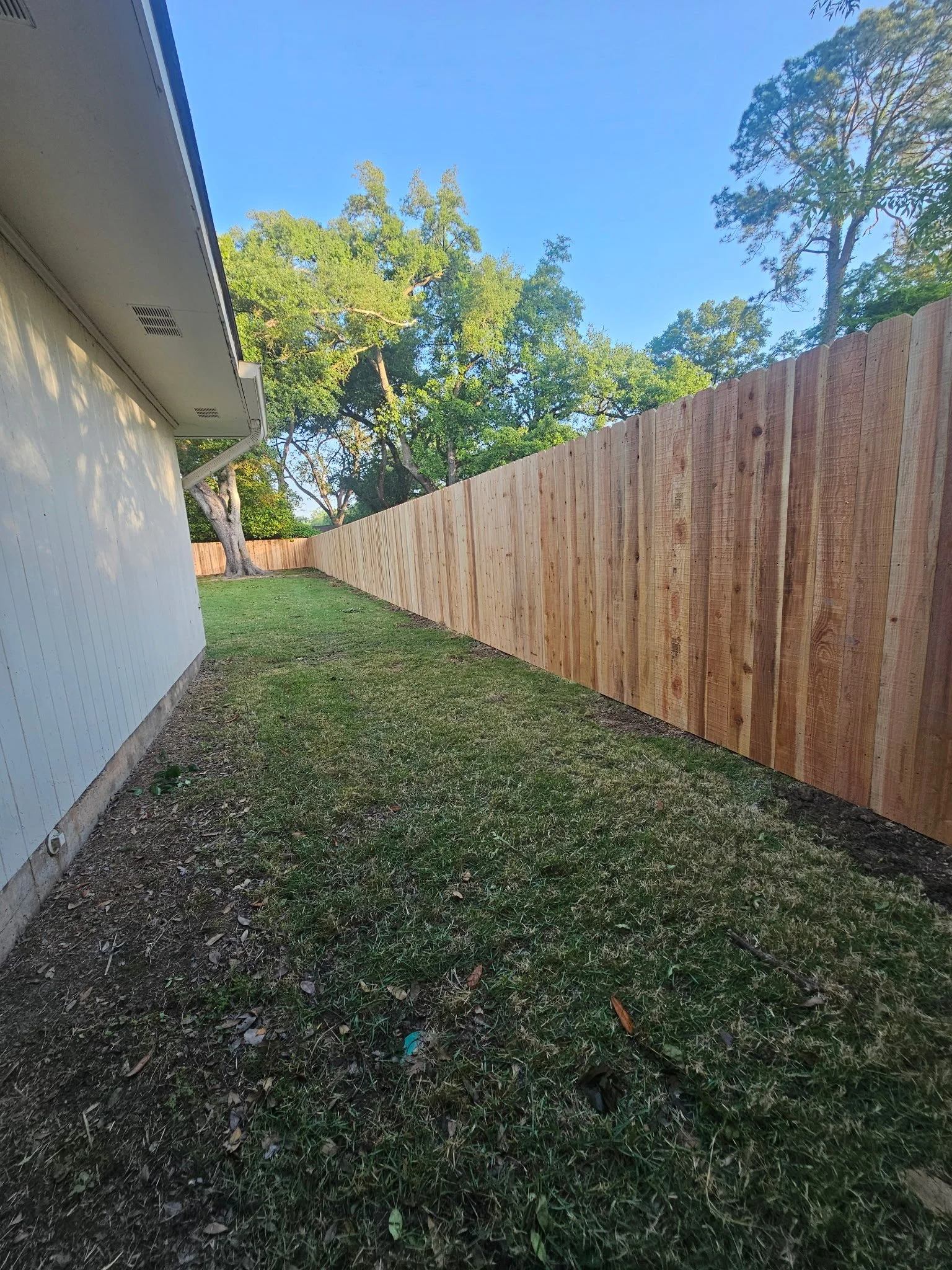
Why Cedar Outperforms Pine in Louisiana's Termite Zone
If you're installing a wood fence in South Louisiana, the species of wood you choose matters more than almost any other decision you'll make. And in a state with one of the most aggressive subterranean termite populations in the country, that decision could be the difference between a fence that lasts 15 years and one that fails in 5.
I'm Jay Davis, owner of Legend Fence in Prairieville. We install cedar on the majority of our wood fence jobs — and here's exactly why.
Louisiana's Termite Problem Is Unlike Anywhere Else
Louisiana is home to the Formosan subterranean termite — one of the most destructive termite species in the world. Formosan termites were introduced to Louisiana through New Orleans after World War II and have spread throughout the state. They are significantly more aggressive than native subterranean termites, build larger colonies, and can cause structural damage faster than almost any other wood-destroying insect in North America.
Ascension Parish, East Baton Rouge Parish, and surrounding communities are all in high-activity Formosan termite zones. If you're installing a wood fence in Prairieville or Baton Rouge, you're installing it in one of the highest termite pressure environments in the United States. Your material choice needs to reflect that reality.
How Pine Handles Louisiana's Termite Pressure
Most wood fences installed in Louisiana use pressure-treated Southern Yellow Pine. The pressure treatment process forces chemical preservatives — typically copper-based compounds — deep into the wood to protect against rot and insect damage. And it works — to a point.
The problem with pressure-treated pine in Louisiana's termite environment is that the chemical protection isn't permanent. Over time the preservatives leach out of the wood as it's exposed to moisture, soil contact, and the freeze-thaw cycles that occur even in South Louisiana's mild winters. As the chemical protection diminishes, the wood becomes increasingly vulnerable to termite attack.
Pine is also a softer, more porous wood than cedar. It absorbs moisture readily — which is exactly the environment subterranean termites seek out. Termites need moisture to survive. A pine fence post that's been in Louisiana soil for several years, absorbing ground moisture and gradually losing its chemical treatment, becomes increasingly attractive to termite colonies over time.
Why Cedar Is Different
Cedar's resistance to termites isn't chemical — it's natural. Cedar contains thujaplicins, a group of natural compounds found in the heartwood of cedar trees that are toxic to insects including termites. These compounds give cedar its characteristic smell and its natural insect-repelling properties. Unlike the chemical treatment in pine, cedar's natural resistance doesn't leach out or diminish over time the way preservatives do.
Cedar is also naturally resistant to moisture. Its tight grain structure and natural oils repel water rather than absorbing it — which means cedar fence posts and boards don't create the moist environment that attracts termites in the first place. You're fighting termites on two fronts with cedar — the natural compounds deter them directly, and the moisture resistance removes the conditions they need to thrive.
The Practical Difference in Louisiana
In Louisiana's termite zone the practical difference between cedar and pine shows up in fence lifespan and post integrity. The most common wood fence failure we see is post rot at the base — where the post meets the ground. This is where moisture is highest, where soil contact is constant, and where termite activity is most likely.
Pine posts in Louisiana's soil — even pressure-treated ones — are vulnerable at the base once the chemical treatment begins to diminish. We've seen pressure-treated pine posts show significant termite damage within 7 to 10 years in high-activity areas of Ascension Parish.
Cedar posts in the same conditions hold up significantly better. The natural oils and tight grain that make cedar moisture-resistant also make it less hospitable to termite activity at the ground line. Combined with a proper concrete footing that keeps the post anchored and minimizes direct soil contact with the wood, cedar posts in Louisiana can last 15 to 20 years.
Where We Source Our Cedar
At Legend Fence we source all of our cedar locally from Picou Builders in Gonzales. Consistent quality from a trusted local supplier is part of why our cedar installations perform the way they do. We know the lumber we're putting in the ground on every job — and we wouldn't install anything we wouldn't put on our own property.
What About Termite Treatment?
Cedar's natural resistance is significant but it isn't a guarantee against termite activity in Louisiana's high-pressure environment. For homeowners in areas with known heavy Formosan termite activity, we recommend:
Having your property treated by a licensed pest control company before fence installation. Pre-treating the soil around fence posts in high-activity areas. Inspecting fence posts annually for early signs of termite activity — mud tubes, soft wood, or hollow-sounding posts when tapped.
Cedar gives you a meaningful natural advantage over pine in Louisiana's termite zone. Combined with proper installation and basic maintenance, it's the best wood fence option available for our climate.
The Bottom Line
In South Louisiana's termite environment cedar isn't just a preference — it's the right call. Natural insect resistance that doesn't diminish over time, moisture resistance that reduces termite habitat, and a lifespan advantage over pressure-treated pine that shows up in real installations across Ascension Parish and East Baton Rouge Parish.
At Legend Fence we install cedar on the majority of our wood fence jobs because it's what we'd put on our own properties. Every installation is backed by our 2-Year Workmanship Warranty and built with cedar sourced locally from Picou Builders in Gonzales.
Get a Free Estimate
Ready to talk about a cedar fence for your property? Call Jay Davis at (225) 433-3620 or fill out our contact form at legend-fence.com. Jay will come out personally, walk your property, and give you a straight quote.
Legend Fence serves Prairieville, Baton Rouge, Gonzales, Denham Springs, Walker, Central, Zachary, Hammond, Covington, and New Orleans, Louisiana.
How Long Does a Fence Last in South Louisiana?
One of the most common questions I get from homeowners planning a fence project is how long it will actually last. It's a fair question — a fence is a significant investment and you want to know what you're getting into before you commit.
I'm Jay Davis, owner of Legend Fence in Prairieville. Here's an honest answer based on real installations across Ascension Parish and East Baton Rouge Parish — not the optimistic numbers you'll find on manufacturer websites.
The Louisiana Variable
Fence lifespan estimates you find online are typically written for average climates. South Louisiana is not an average climate.
High humidity year-round, intense UV exposure, heavy seasonal rainfall, expansive clay soils that shift and move, active subterranean termite populations, and annual hurricane season — all of these factors accelerate fence deterioration compared to what you'd see in drier parts of the country. A fence that lasts 25 years in Arizona might last 12 in Louisiana if the wrong materials are used or it's installed incorrectly.
The good news is that when the right materials are selected and the fence is installed correctly — concrete-set posts, quality products, proper finishing — South Louisiana fences can perform excellently for decades.
Here's what to realistically expect from each material in our climate.
Cedar Wood Fence — 15 to 20 Years
A properly installed cedar privacy fence in South Louisiana will last 15 to 20 years with basic maintenance. Cedar is our material of choice for wood fences at Legend Fence — we source all of our cedar locally from Picou Builders in Gonzales.
Cedar's natural oils make it resistant to rot, moisture, and insects, which gives it a significant lifespan advantage over standard pine in Louisiana's climate. The keys to maximizing cedar fence lifespan here are concrete-set posts, pressure-treated bottom rails that stay off the ground, and periodic cleaning and staining with a quality penetrating stain like TWP every 2 to 3 years.
Without maintenance — no staining, no cleaning, debris piling against the base — expect that lifespan to drop to 10 to 12 years in Louisiana's humidity.
What shortens cedar fence life in Louisiana: Posts not set in concrete — without a solid concrete footing, posts shift in Louisiana's clay soil and fail prematurely. Bottom rails sitting in standing water. No staining or sealing. Soil or mulch piled against the base boards. Untreated storm damage left unrepaired.
Vinyl Fence — 20 to 30 Years
Vinyl is the longest-lasting fence material available for South Louisiana residential properties. A properly installed vinyl fence can last 20 to 30 years in our climate with virtually zero maintenance — no painting, no staining, no sealing.
At Legend Fence we install Country Estates vinyl — manufactured specifically for Southern climates with UV stabilizers and color retention built into the material. Cheap vinyl that isn't UV-rated will chalk, fade, and become brittle within a few years in Louisiana's sun. Country Estates is engineered to hold its color and structural integrity in high-sun, high-humidity environments.
The limiting factor on vinyl fence lifespan isn't usually the material — it's the posts. Vinyl panels attached to posts that weren't set in concrete will shift and rack as the clay soil moves, putting stress on the panel connections over time. That's why concrete-set posts matter just as much on vinyl installations as on wood.
What shortens vinyl fence life in Louisiana: Posts not set in concrete. Cheap vinyl not rated for UV exposure. Impact damage from storm debris left unrepaired. Incorrect panel installation that traps moisture.
Aluminum Fence — 25 to 30+ Years
Aluminum is one of the most durable fence materials available in Louisiana's climate. It won't rust, rot, warp, or require painting. A properly installed aluminum fence can last 25 to 30 years or more in South Louisiana with almost no maintenance beyond an occasional rinse.
At Legend Fence we install Antebellum Manufacturing aluminum — American-made fencing fabricated in Ocala, Florida using U.S. extrusions. Antebellum's powder-coated finish is engineered for corrosion resistance and UV stability. The consistent quality of American-made extrusions means the material performs predictably over its lifespan in our climate.
The main threat to aluminum fence longevity in Louisiana isn't the material itself — it's gate hardware. Hinges, latches, and gate hardware exposed to our humidity need periodic inspection and lubrication to prevent corrosion and binding.
What shortens aluminum fence life in Louisiana: Neglected gate hardware. Physical damage from vehicles or storm debris. Poor quality imported aluminum with inconsistent powder coating.
Chain-Link Fence — 15 to 25 Years
Galvanized chain-link is one of the most durable fencing options available and holds up well in Louisiana's climate. A properly installed galvanized chain-link fence can last 15 to 25 years depending on gauge, coating quality, and exposure conditions.
Vinyl-coated chain-link — which we install in black or green — adds an extra layer of protection against moisture and UV exposure and can extend lifespan toward the higher end of that range.
The posts are again the critical factor. Steel posts set in concrete will outlast the chain-link mesh itself. Posts driven into the ground or set with inadequate concrete will rust at the base and fail first.
What shortens chain-link fence life in Louisiana: Light gauge mesh on high-stress applications. Posts not set in concrete. Cuts or damage in the coating that allow moisture to reach the steel. Salt air exposure in coastal areas.
Ornamental Iron & Steel Fence — 20 to 50+ Years
Properly maintained ornamental iron is one of the longest-lasting fence materials available — but it requires more maintenance than any other option in Louisiana's climate. Iron rusts. In South Louisiana's humidity, untreated or poorly coated iron will show rust within a few years of installation.
At Legend Fence we install Ameristar ornamental iron with a quality powder-coated finish engineered for corrosion resistance. Maintained properly — inspected annually, touch-up painted where the coating is damaged, rust treated promptly — an ornamental iron fence in Louisiana can last decades. Neglected, it can deteriorate significantly within 10 years.
What shortens iron fence life in Louisiana: Chips or scratches in the powder coating left untreated. No annual inspection or maintenance. High salt air exposure near the coast. Standing water at post bases.
The Installation Factor
Here's the honest truth about fence lifespan in South Louisiana — the installation quality matters as much as the material. The best cedar in the world will fail prematurely if the posts aren't set in concrete. The highest-quality vinyl will rack and shift if the footings aren't adequate for Louisiana's clay soil.
At Legend Fence every post goes in concrete, every installation gets a personal inspection from Jay Davis before we leave the job site, and every fence is backed by our 2-Year Workmanship Warranty covering post stability and gate alignment. We build fences to last in this climate — not just to look good on install day.
Fence Installation and Repair in Prairieville & Baton Rouge
Ready to talk about a fence that will actually last on your property? Call Jay at (225) 433-3620 or fill out our contact form at legend-fence.com. Jay will come out personally, walk your property, and recommend the right material for your specific situation and budget.
Legend Fence serves Prairieville, Baton Rouge, Gonzales, Denham Springs, Walker, Central, Zachary, Hammond, Covington, and New Orleans, Louisiana.
How to Survive Hurricane Season With Your Fence Intact
If you've lived in South Louisiana long enough, you know what hurricane season does to fences. A storm rolls through, and the next morning half the neighborhood is picking up fence panels out of their yards — or worse, out of their neighbor's yard.
I'm Jay Davis, owner of Legend Fence in Prairieville. I've seen what storms do to fences that were built right and fences that weren't. Here's what every Ascension Parish and East Baton Rouge Parish homeowner needs to know before the next storm season hits.
Why Fences Fail in Storms
The most common reason fences fail in high winds isn't the material — it's the posts. A fence panel acts like a sail. When wind hits it, all of that force transfers directly into the posts. Posts that aren't anchored properly have nothing to resist that lateral force. They shift, lean, and eventually pull out of the ground entirely — taking the panels with them.
The second most common reason is gate failure. Gates are the most structurally vulnerable part of any fence because they're designed to swing open. During a storm a gate that isn't properly latched or built with adequate framing becomes a battering ram — slamming against the fence repeatedly until something gives.
The third reason is material failure — cheap lumber, corroded hardware, and low-quality vinyl that wasn't engineered for high-wind environments all fail faster under storm stress than premium materials.
What Makes a Fence Storm-Ready
Concrete-set posts — non-negotiable
Every Legend Fence installation uses concrete-set posts. In Ascension Parish's clay soils this isn't optional — it's how you build a fence that stays standing when wind loads hit. We set posts deeper than the standard minimum specifically because Louisiana's expansive clay shifts and moves seasonally. A deep concrete footing anchors the post against both soil movement and lateral wind force.
After Hurricane Ida in 2021, the fences we saw standing were almost universally the ones with properly set concrete footings. The ones that failed were posts driven directly into the ground or set with minimal concrete. The difference was that simple.
Cedar wood handles storm stress better than pine
For wood fences, material choice affects storm performance. Cedar is dimensionally stable — it doesn't warp and cup the way pine does when it gets saturated with water during a storm. Warped boards create gaps and weak points that wind exploits. Cedar's natural density also gives it better resistance to impact from debris.
We source all of our cedar from Picou Builders in Gonzales — consistent quality lumber that performs in Louisiana's climate.
Vinyl needs to be engineered for wind
Not all vinyl is created equal. Cheap vinyl becomes brittle in UV exposure and can shatter under impact during a storm. Country Estates vinyl — what we install at Legend Fence — is manufactured specifically for Southern climates with structural integrity built in. The difference shows when a storm rolls through.
Gates need to be overbuilt
At Legend Fence our wood gates are built with Schedule 40 steel posts and metal frames with trust rods — the same structural approach used in commercial applications. This isn't standard residential gate construction. It's overbuilt on purpose, specifically because gates are the first thing to fail in a storm.
Our aluminum gates come pre-manufactured by Antebellum — engineered gate systems with heavier wall posts for added structural strength.
Before Storm Season — What to Check
Walk your fence line every spring before hurricane season starts. Here's what to look for:
Leaning posts — any post that has shifted from vertical needs to be addressed before a storm hits. A leaning post under wind load will fail completely.
Loose boards and panels — boards that have started to pull away from rails need to be refastened. Every loose board is a potential projectile in high winds.
Gate alignment — a gate that doesn't latch properly or swings unevenly is a liability in a storm. Get it adjusted before season.
Hardware corrosion — rusted hinges, corroded screws, and deteriorated hardware all fail faster under stress. Replace anything that looks compromised.
Post bases — look at where your posts meet the ground. Soft or spongy wood at the base means rot has set in and the post needs to be replaced before it fails.
After a Storm — What to Do
Walk your full fence line as soon as it's safe after any significant weather event. Look for:
Leaning or fallen sections — document everything with photos before you touch anything, especially if you're filing an insurance claim.
Debris impact damage — branches and debris driven by wind can crack boards and bend metal components even on fences that otherwise survived.
Gate damage — check that gates still swing freely, latch properly, and haven't been knocked out of alignment.
Post movement — push on posts along the fence line. Any post that rocks or shifts needs attention before the next storm.
Important — our 2-Year Workmanship Warranty covers installation defects including post stability. It does not cover storm damage, which is typically covered under your homeowner's insurance policy. Document damage thoroughly and contact your insurer promptly after a storm event.
Storm Damage Repair in Prairieville & Baton Rouge
If your fence took damage in a storm, Legend Fence handles storm damage repair for all fence types and all brands — including fences we didn't install. Jay will come out personally, assess the damage, and give you a straight quote on what it'll take to get your fence back in shape.
Call Jay at (225) 433-3620 or fill out our contact form at legend-fence.com. We serve Prairieville, Baton Rouge, Gonzales, Denham Springs, Walker, Central, Zachary, Hammond, Covington, and New Orleans, Louisiana.
Why We Set Every Fence Post in Concrete in Louisiana
Here it is — ready to copy-paste:
Post Title: Why We Set Every Fence Post in Concrete in Louisiana
If you've gotten multiple fence quotes in Prairieville or Baton Rouge, you may have noticed that not every contractor sets posts the same way. Some use concrete. Some don't. Some mix it right in the hole. Others use fast-set bags.
At Legend Fence, every post we install goes in concrete — no exceptions. Here's exactly why, and why it matters more in Louisiana than almost anywhere else in the country.
The Ground Under Your Feet in Ascension Parish
South Louisiana sits on some of the most challenging soil conditions for fence installation in the United States. Ascension Parish and East Baton Rouge Parish are underlaid with expansive clay — a soil type that absorbs water and swells when wet, then shrinks and contracts when it dries out.
That seasonal movement puts constant stress on fence posts. A post that's simply driven into the ground or set in loose soil has nothing anchoring it against that movement. Over time — sometimes within a single year — those posts shift, lean, and fail.
Concrete creates a stable footing that distributes the load of the post across a larger surface area and anchors it against the clay soil's movement. It's not optional in Louisiana. It's how you build a fence that lasts.
What Happens When Posts Aren't Set in Concrete
I've seen it hundreds of times — a fence that looked great on install day leaning badly within 18 months because the posts weren't properly set. Here's what actually happens:
Clay soil expands after heavy rain. Posts without concrete footings shift laterally as the soil moves. Once a post starts leaning, the panels attached to it pull on the adjacent posts, creating a chain reaction. Gates are usually the first thing to fail — they stop latching, start dragging, and eventually can't be closed at all.
By the time most homeowners call for repairs, what started as a single leaning post has become a section — or multiple sections — that need to be reset entirely.
Setting posts in concrete from the start costs more upfront. But it eliminates the most common and expensive fence failure in South Louisiana completely.
Storm Season Makes It Non-Negotiable
Every Prairieville homeowner knows what storm season means. High winds, heavy rain, and the occasional tropical system put enormous lateral force on fence sections. A fence panel acts like a sail — the wind catches it and pushes hard against the posts holding it up.
Posts set in concrete can resist that lateral force. Posts that aren't properly anchored cannot. The difference between a fence that survives a storm and one that ends up in your neighbor's yard is almost always the quality of the post installation.
After Hurricane Ida in 2021, one of the most common calls we got was from homeowners whose fences had blown down — and in almost every case, the posts had either been driven directly into the ground or set with minimal concrete. The fences with properly set concrete footings held.
How We Set Posts at Legend Fence
Every post Legend Fence installs follows the same process:
We dig the hole to the appropriate depth for the post height and local soil conditions. In Ascension Parish's clay soils we go deeper than the standard minimum — Louisiana's soil movement demands it.
We set the post, check it for plumb, and pour concrete around it. We use the right concrete mix for the application and allow proper cure time before attaching panels and rails.
Gate posts get extra attention — they carry more load than line posts and take the most abuse over the life of the fence. We size gate post holes larger and use more concrete accordingly.
Jay Davis personally inspects every post installation before panels go up. If a post isn't set right, it gets reset before the job moves forward. That's not negotiable.
What to Ask Any Fence Contractor
Before you sign a contract with any fence company in the Baton Rouge or Prairieville area, ask this specific question:
"How do you set your posts — and how deep do they go in clay soil?"
A contractor who knows their craft will give you a specific answer. If the answer is vague — "we set them properly" or "we use standard installation methods" — that's a red flag. Standard isn't good enough in Louisiana's soil conditions.
Also ask whether they use fast-set concrete poured dry into the hole or properly mixed concrete. Both can work, but the method and cure time matter. Ask what they do specifically.
At Legend Fence we're happy to walk any customer through exactly how we install posts on their specific property during the free estimate. No vague answers — just straight information.
Backed by Our 2-Year Workmanship Warranty
We set every post in concrete because we're confident enough in our installation to back it with our 2-Year Workmanship Warranty — covering post stability, gate alignment, and installation defects. That warranty only means something if the posts are set right from the start.
If a post shifts or a gate misaligns because of how we installed it, we fix it. That's our commitment to every customer in Prairieville, Baton Rouge, Gonzales, and surrounding Louisiana communities.
Get a Free Estimate From Legend Fence
Ready to talk about your fence project? Call Jay Davis at (225) 433-3620 or fill out our contact form at legend-fence.com. Jay will come out personally, walk your property, and give you a straight quote — built on a foundation that will last.
Legend Fence serves Prairieville, Baton Rouge, Gonzales, Denham Springs, Walker, Central, Zachary, Hammond, Covington, and New Orleans, Louisiana.
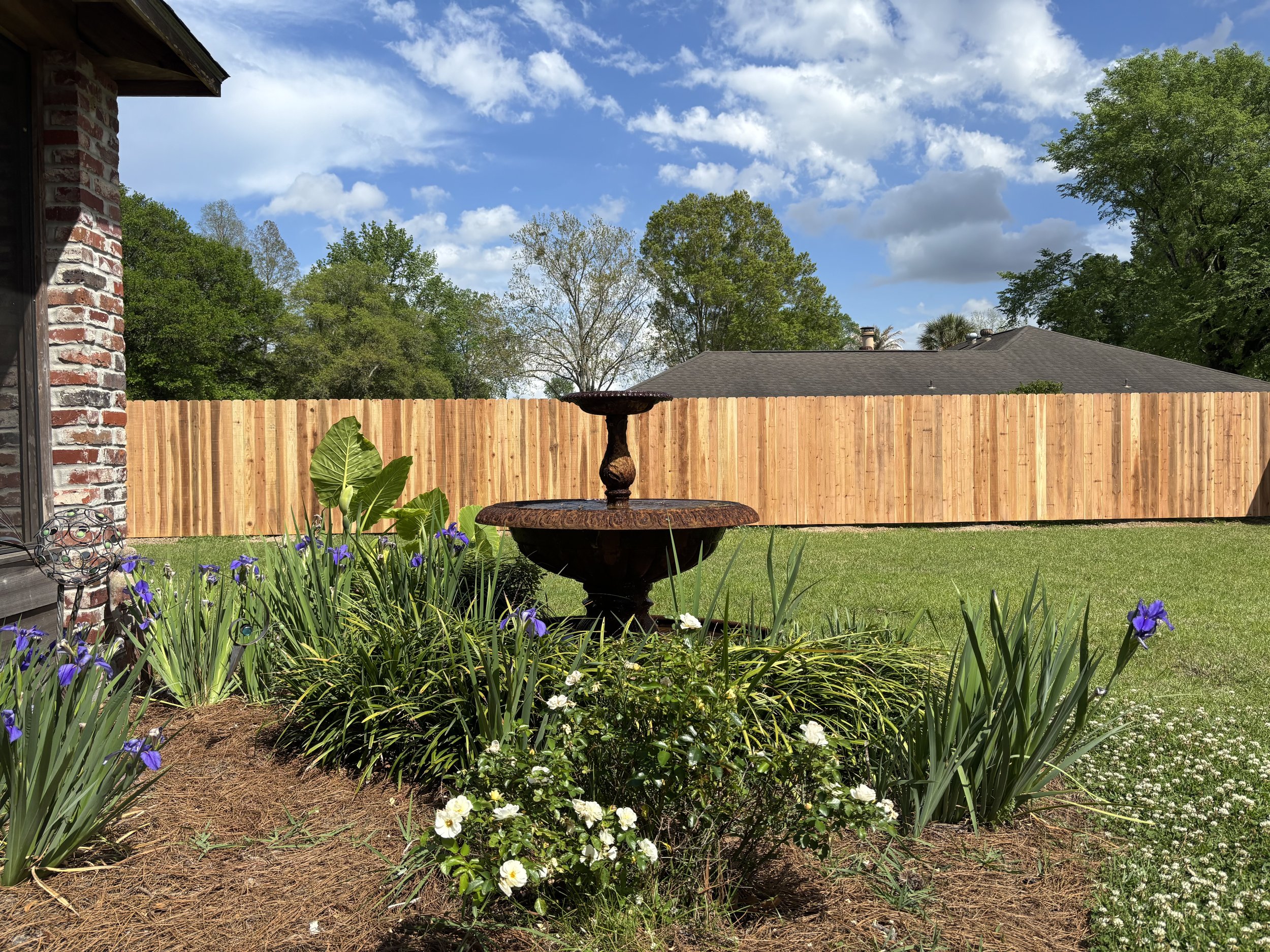
Cedar vs Pine Fence in Louisiana — Which One Actually Lasts
When Louisiana homeowners ask me about wood fences, one question comes up more than any other — cedar or pine? Both are popular. Both are available. And the answer matters a lot more in South Louisiana than it does anywhere else in the country.
I'm Jay Davis, owner of Legend Fence in Prairieville. I've installed wood fences across Ascension Parish, East Baton Rouge, and surrounding communities, and the majority of our wood installations are cedar. Here's exactly why — and what you need to know before you choose a wood for your fence.
The Louisiana Problem With Wood Fences
South Louisiana is one of the hardest climates in the country on wood. You're dealing with high humidity year-round, heavy rainfall, intense UV exposure, standing water after storms, and one of the most active subterranean termite populations in the United States. A wood fence that performs fine in Tennessee or Texas can fail significantly faster here.
That's the context you need when comparing cedar and pine. This isn't a general wood fence comparison — it's a Louisiana wood fence comparison. And in Louisiana, those are very different things.
Pine Fence in Louisiana
Most pine used in fencing is pressure-treated Southern Yellow Pine. The pressure treatment process forces chemical preservatives deep into the wood to protect against rot and insects — which sounds like exactly what you need in Louisiana.
And pressure-treated pine does work. It's widely available, affordable, and will hold up reasonably well when properly installed. But there are real limitations to understand.
Pressure-treated pine is heavier than cedar, which means more stress on posts and rails over time. It has a higher moisture content when it comes out of the treatment process, which means it tends to warp, twist, and crack as it dries — especially in Louisiana's heat. Those cracks and gaps create entry points for moisture and insects that reduce the fence's lifespan.
Pine also doesn't hold stain as well as cedar, which matters if you want a finished, consistent look on your fence long-term. And while the pressure treatment protects against rot and insects initially, that protection diminishes over time as the chemicals leach out of the wood.
A well-installed pressure-treated pine fence in Louisiana can last 10 to 15 years with proper maintenance. Without maintenance — staining, sealing, addressing damage promptly — you're looking at significantly less.
Cedar Fence in Louisiana
Cedar is my material of choice for wood fences in Louisiana, and it's what we install on the majority of our wood fence jobs. Here's why.
Cedar is naturally rot-resistant. It doesn't rely on chemical treatment to resist moisture and decay — that resistance is built into the wood itself through natural oils that repel water and inhibit the growth of fungi and bacteria. In Louisiana's humidity, that natural resistance is a significant advantage over pine.
Cedar is also naturally insect-resistant. Those same natural oils that repel moisture also deter termites and other wood-boring insects. In Ascension Parish and East Baton Rouge, where subterranean termite pressure is among the highest in the country, that matters.
Cedar is lighter than pressure-treated pine, which means less stress on your fence structure over time. It's dimensionally stable — it resists the warping, twisting, and cracking that plague pine as it dries. And it holds stain exceptionally well, which means a cedar fence that's properly maintained will look good for years longer than a comparable pine fence.
We source all of our cedar locally from Picou Builders in Gonzales. Consistent quality from a trusted local supplier is part of why our cedar installations perform the way they do.
A properly installed and maintained cedar fence in South Louisiana can last 15 to 20 years. That's a meaningful difference from pine — and in fencing, longevity is value.
Cedar vs Pine — Side by Side
Rot resistance: Cedar wins. Natural oils provide built-in protection without chemical treatment.
Insect resistance: Cedar wins. Natural oils deter termites and wood-boring insects.
Dimensional stability: Cedar wins. Less warping, twisting, and cracking in Louisiana's heat and humidity.
Stain performance: Cedar wins. Holds stain better and longer for a cleaner finished look.
Upfront cost: Pine wins. Pressure-treated pine is typically less expensive per linear foot than cedar.
Availability: Roughly equal. Both are widely available in the South Louisiana market.
So Which One Should You Choose?
If upfront cost is your primary concern and you understand you're making a trade-off on longevity, pressure-treated pine is a reasonable choice. Installed correctly with concrete-set posts and properly maintained, it will give you a functional fence.
If you want the best performing wood fence for Louisiana's climate — one that's going to look good and stand strong for 15 to 20 years — cedar is the right choice. The higher upfront cost is offset by longer lifespan, lower maintenance requirements, and better appearance over time.
At Legend Fence, we recommend cedar for every wood fence project we take on in South Louisiana. It's what we'd put on our own properties, it's what we source locally from Picou Builders in Gonzales, and it's what we install on the majority of our wood fence jobs across Prairieville, Baton Rouge, and Ascension Parish.
If you're ready to talk about a wood fence for your property, call us at (225) 433-3620 or fill out our contact form for a free estimate. Jay will come out personally, walk your property, and give you a straight answer on what it'll cost
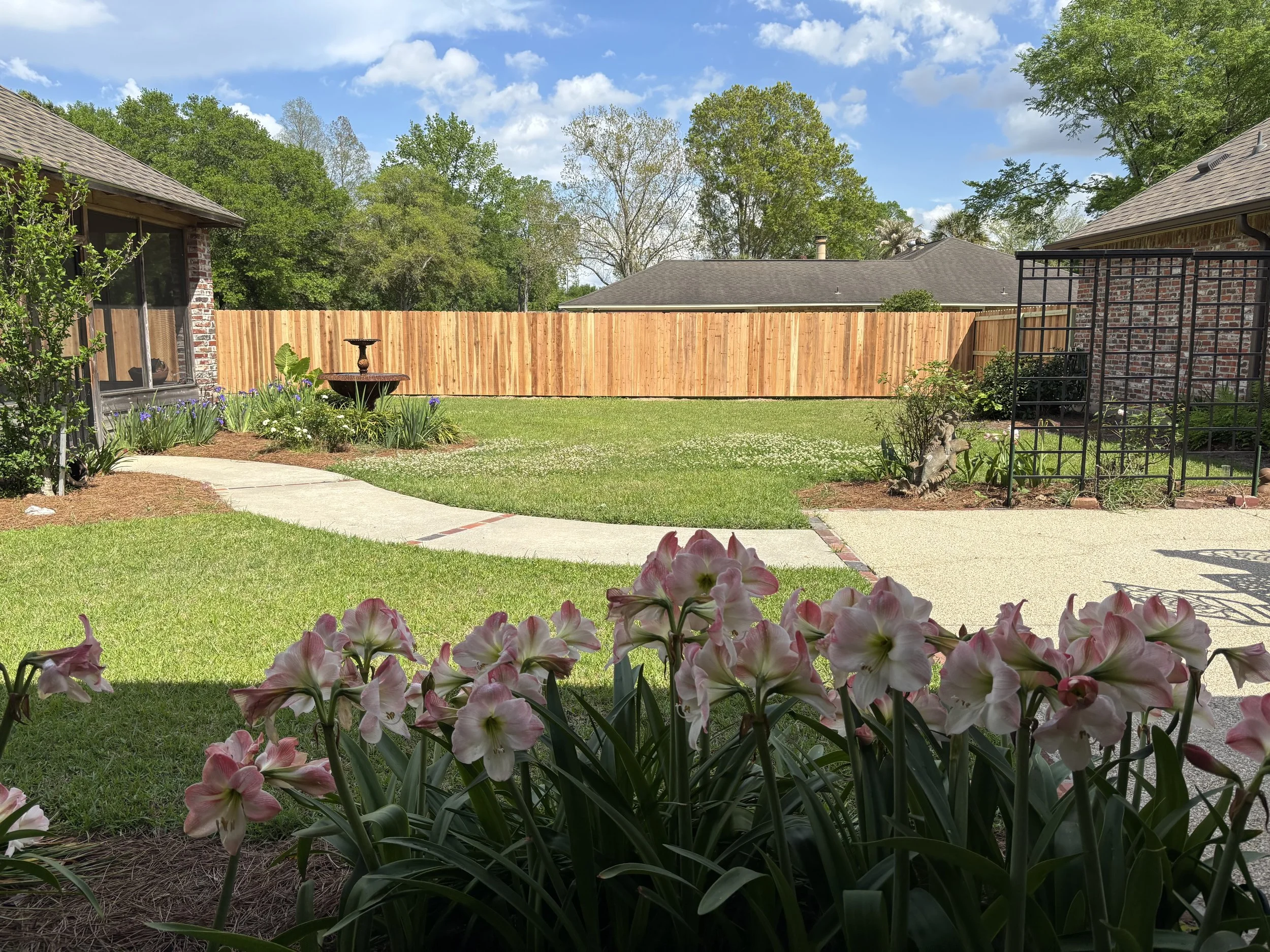
Signs Your Fence Needs Repair
A fence is one of the most important parts of your property when it comes to privacy, security, and curb appeal. But over time, even a well-built fence can begin to show wear. Weather, age, moisture, storms, and everyday use can all lead to damage that should not be ignored.
For homeowners and businesses in Prairieville, Baton Rouge, and surrounding areas, catching fence problems early can help prevent more expensive repairs later. If you notice any of the signs below, it may be time to have your fence inspected and repaired.
Leaning Fence Posts
One of the most obvious signs a fence needs repair is when sections start to lean. Leaning posts can happen because of shifting soil, water damage, storm impact, or rotting wood below the surface.
A leaning fence may still be standing, but it usually means the support system is weakening. If not repaired, the problem can spread to nearby sections and eventually lead to larger structural failure.
Broken or Missing Boards
Broken, cracked, or missing boards are common on wood fences, especially after storms or years of exposure to sun and moisture. Even one damaged board can affect the appearance of the fence and create a weak point in the structure.
Replacing damaged boards early helps preserve the look of the fence and prevents further issues from developing.
Rotting Wood
Wood rot is one of the biggest warning signs that a wood fence needs attention. Rot often develops near the base of posts or in areas where moisture stays trapped for too long.
Signs of wood rot may include:
soft or crumbling wood
dark discoloration
boards that feel weak or spongy
posts that no longer feel stable
If caught early, some areas can be repaired. If ignored too long, sections may need to be replaced.
Loose or Sagging Gates
A gate that drags, sags, or no longer closes properly is another common sign of fence problems. In some cases, the gate itself may be damaged. In other situations, the issue may come from leaning posts, loose hinges, or general shifting in the fence line.
Because gates get frequent use, small problems can worsen quickly if repairs are delayed.
Rust or Corrosion on Metal Fences
Metal fences, chain-link fencing, and gate hardware can develop rust or corrosion over time, especially in humid Louisiana conditions. Surface rust may start as a minor issue, but it can spread and weaken sections of the fence if not addressed.
Signs to watch for include:
rust spots
flaking metal
bent or weakened sections
loose hardware or hinges
Repairing metal fence issues early can help extend the life of the fence and prevent larger replacement costs.
Storm Damage
Strong winds, heavy rain, and falling limbs can all damage fences. Sometimes storm damage is obvious, such as fallen sections or broken boards. Other times, the damage is more subtle, like a slightly leaning post or loosened section that worsens later.
After a storm, it is a good idea to inspect your fence for signs of new damage even if the fence appears mostly intact.
Fence Sections That Feel Loose
If parts of the fence wobble or move when touched, that can be a sign that posts, fasteners, or panels are beginning to fail. A loose fence may still look fine from a distance, but it can become unsafe or unstable over time.
Professional fence repair can help strengthen weak sections before they become larger problems.
Cracked or Damaged Vinyl Panels
Vinyl fencing is durable and low maintenance, but it can still crack or become damaged from impact, shifting, or wear over time. Damaged panels or rails should be repaired promptly to maintain the appearance and strength of the fence.
Why Quick Repairs Matter
Waiting too long to repair a fence can turn a smaller issue into a larger and more expensive problem. A damaged board can lead to structural weakness. A leaning post can affect multiple panels. A loose gate can place additional stress on surrounding sections.
Repairing a fence early can help:
extend the life of the fence
restore security and privacy
improve appearance
prevent larger replacement costs
keep the fence safe and functional
When to Repair vs Replace
Not every damaged fence needs full replacement. In many cases, individual boards, posts, panels, gates, or sections can be repaired without replacing the entire fence.
A professional inspection can help determine whether repair is the better option or if replacement makes more sense based on the age and condition of the fence.
Fence Repair in Prairieville and Baton Rouge
Legend Fence provides professional fence repair services for homeowners and businesses in Prairieville, Baton Rouge, and surrounding areas. We repair wood fences, vinyl fences, chain-link fences, metal fencing, gates, and damaged fence sections.
Whether your fence is leaning, weather-worn, storm-damaged, or simply showing signs of age, our team can help you restore it with quality workmanship and dependable service.
Get a Free Fence Repair Estimate
If your fence is showing signs of damage, Legend Fence can help you determine the best next step.
Contact us today for a free estimate and let us help restore your fence.
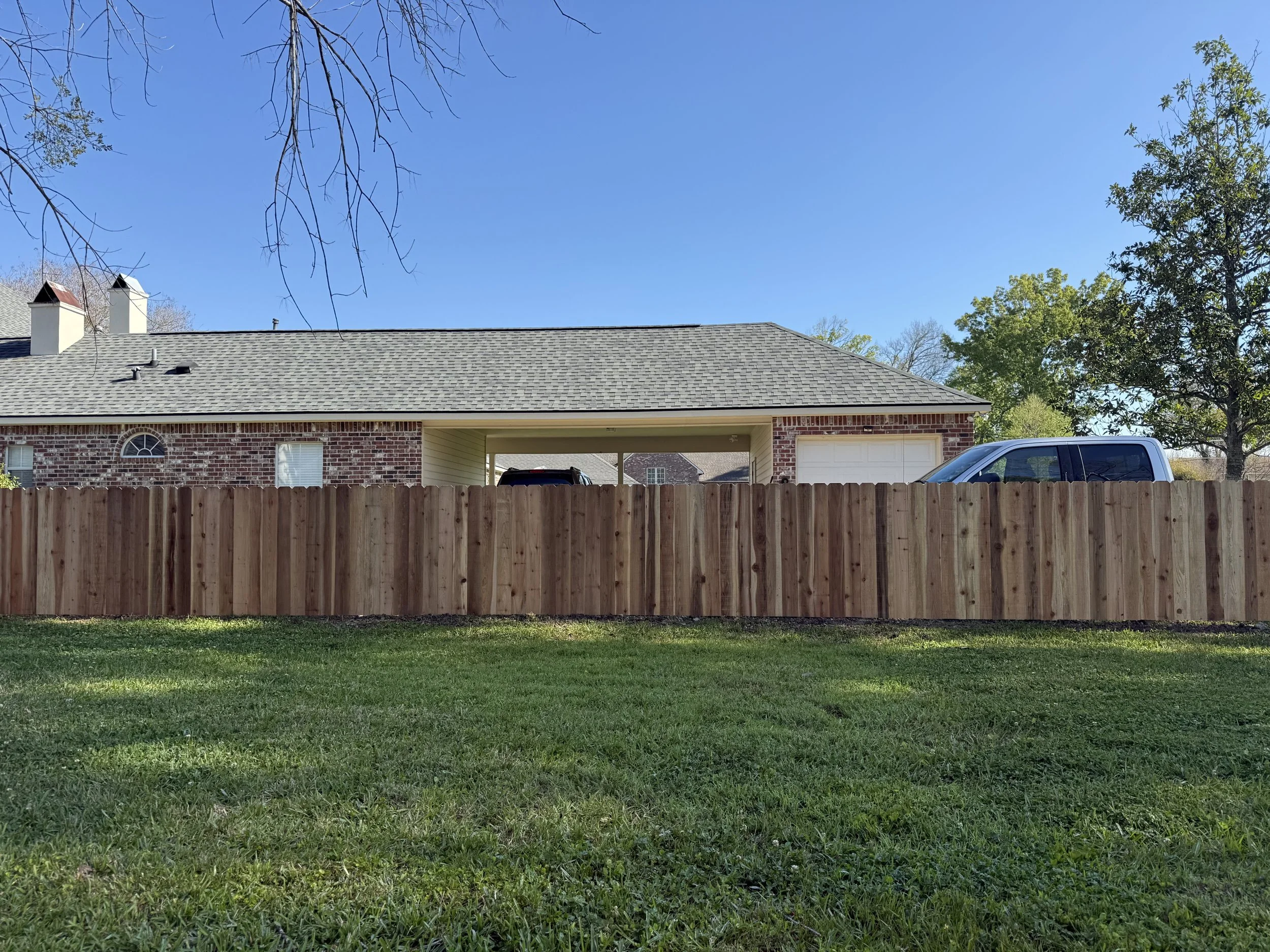
Best Fence for Louisiana Weather
Choosing the right fence in Louisiana is about more than style. The heat, humidity, heavy rain, and storms common across South Louisiana can all take a toll on outdoor materials over time. If you want a fence that looks good and lasts, it’s important to choose a material that can handle Louisiana weather.
Whether you live in Prairieville, Baton Rouge, or a surrounding area, the best fence for your property depends on your goals for privacy, maintenance, durability, and appearance.
What Makes Louisiana Weather Tough on Fences?
Louisiana fences deal with several weather-related challenges throughout the year.
Heat and Sun Exposure
Strong sun and high temperatures can dry out certain materials, fade finishes, and cause expansion and contraction over time.
Humidity and Moisture
Humidity can cause wood to absorb moisture, which may lead to warping, rot, or mold if the fence is not properly maintained.
Heavy Rain
Frequent rain can weaken fence posts, soften ground conditions, and shorten the lifespan of poorly installed fences.
Storms and Wind
Strong storms and high winds can damage weak fence sections, loosen posts, and cause leaning or fallen panels.
Because of these conditions, choosing the right fence material and professional installation are both important.
Best Fence Materials for Louisiana Weather
Vinyl Fencing
Vinyl fencing is one of the best options for Louisiana weather because it is low maintenance and resistant to rot, insects, and moisture. Unlike wood, vinyl does not need to be painted or stained, and it holds up well in humid conditions.
Vinyl is a strong choice for homeowners who want privacy, durability, and a clean finished look with less upkeep.
Aluminum Fencing
Aluminum fencing is another excellent option for Louisiana homes. It does not rust like untreated metal, and it performs well in wet and humid environments. Aluminum fences are often used around pools, front yards, and decorative property lines because they provide security while maintaining an open appearance.
This is a great option for homeowners who want durability and curb appeal with minimal maintenance.
Wood Fencing
Wood fencing remains one of the most popular fencing choices because of its natural appearance and privacy benefits. However, in Louisiana weather, wood requires more maintenance than vinyl or aluminum.
With proper installation, sealing, and upkeep, a wood fence can still be a great option. For homeowners who want the look and feel of a traditional privacy fence, wood is still a strong choice, but it needs more attention over time.
Chain-Link Fencing
Chain-link fencing is a durable and cost-effective option for Louisiana properties. Galvanized and coated chain-link fences can hold up well against rain and humidity, especially when properly installed.
Chain-link is often a good fit for homeowners who want security, pet containment, or a practical fencing solution without the higher cost of decorative materials.
Iron and Steel Fencing
Iron and steel fencing can provide excellent strength and a high-end appearance, but they need the right finish and coating to perform well in Louisiana’s humid climate. Powder-coated and properly finished metal fencing is much more resistant to weather-related wear.
These fences are best for customers who want security and style and are willing to invest in quality materials.
Which Fence Is Best for Privacy?
If privacy is the main goal, the best options are usually:
Vinyl privacy fences
Wood privacy fences
Vinyl offers lower maintenance and excellent weather resistance, while wood offers a more traditional natural look. Both can work well in Louisiana, but vinyl generally requires less upkeep over time.
Which Fence Is Best for Low Maintenance?
For low maintenance, the best choices are:
Vinyl fencing
Aluminum fencing
These materials hold up well in humidity and rain and require far less maintenance than wood.
Which Fence Is Best for Budget?
If budget is the biggest concern, chain-link fencing is often one of the most affordable options. Wood can also be cost-effective depending on style and materials.
The best value depends on whether you want the lowest upfront cost or the lowest long-term maintenance.
Why Installation Matters in Louisiana
No matter what material you choose, installation quality matters. In Louisiana, fences need to be installed to handle soft ground conditions, wind, moisture, and long-term exposure to the elements.
A fence built with poor post depth or weak materials may fail much sooner, even if the material itself is a good choice.
Professional installation helps ensure:
Proper post setting
Better long-term stability
Stronger fence lines
Better drainage and durability
Fewer repairs over time
Our Recommendation for Louisiana Homeowners
For most homeowners in Louisiana:
Best overall for durability and low maintenance: Vinyl fence
Best for decorative durability: Aluminum fence
Best for traditional privacy: Wood fence
Best for affordability: Chain-link fence
The right choice depends on your property, goals, and budget. A professional fence company can help you compare the options and choose the best fit.
Fence Installation in Prairieville and Baton Rouge
Legend Fence provides professional fence installation for homeowners and businesses in Prairieville, Baton Rouge, and surrounding Louisiana communities.
We install:
Wood fences
Vinyl fences
Aluminum fences
Chain-link fences
Iron and steel fencing
Commercial fencing
Our team can help you choose a fence that is built to handle Louisiana weather while also matching the look and needs of your property.
Get a Free Fence Estimate
If you’re trying to decide which fence is best for your home, Legend Fence can help.
Contact us today for a free estimate and let us help you choose the right fence for Louisiana weather.
225-433-3620
Fence Permit Rules in Ascension Parish — What Homeowners Need to Know Before They Build
If you're planning a new fence in Ascension Parish, one of the first questions to ask is whether you need a permit. The short answer is yes — in most cases a fence permit is required before construction begins.
I'm Jay Davis, owner of Legend Fence in Prairieville. We install fences throughout Ascension Parish every week and we deal with permit questions on almost every job. Here's a straightforward breakdown of what you need to know.
Is a Fence Permit Required in Ascension Parish?
Yes. Ascension Parish requires a fence permit before construction of any fence or wall. The parish lists a specific Fence Permit application under Building Department documents on their official website. This applies to residential and commercial properties throughout unincorporated Ascension Parish.
The permit fee is currently $25 — one of the lowest permit fees you'll find anywhere in Louisiana.
Who Can Apply for the Permit?
Only the property owner or a licensed fence contractor can apply for an Ascension Parish fence permit. At Legend Fence we are a licensed fence contractor and can advise on the permit process during your free estimate.
What Do You Need to Submit?
Ascension Parish requires a plot plan drawn to scale showing the fence location, property lines, servitudes, property address, lot number and subdivision if applicable, and any streets the property fronts.
Corner lots have an additional requirement — fences cannot be built within the sight triangle at intersections. This catches a lot of homeowners off guard so it's worth checking your lot layout before planning your fence line.
Where Can You NOT Place a Fence?
This is where most permit problems happen. Ascension Parish does not allow fences or walls within servitudes or rights-of-way, and fences cannot impede drainage or be placed within a required sight triangle.
Even if a fence location looks fine visually, underground drainage easements and utility servitudes may restrict where posts can go. We check this on every estimate — a post in the wrong location can create serious headaches down the road.
Fence Height Limits in Ascension Parish
Ascension Parish's Unified Land Development Code establishes these general height limits:
Front yard fences — up to 4 feet Interior side yard fences — up to 6 feet Rear yard fences — up to 8 feet Exterior side yard fences on corner lots adjacent to a street — up to 6 feet
These are general limits — zoning, lot layout, and street frontage can all affect what's allowed on your specific property. Corner lots and properties with unusual layouts should confirm requirements before installation.
What Fence Materials Are Allowed in Ascension Parish?
Ascension Parish permits the following materials: wood, vinyl, brick, stucco, decorative concrete block, metal including wrought iron, and chain link in some situations.
Prohibited materials include plywood, corrugated metal, electrically charged fences except for agricultural purposes, barbed wire unless specifically approved, chicken wire along a property perimeter except for limited internal uses, and chain link along frontages facing an arterial road in the Major Street Plan.
At Legend Fence all of our standard materials — cedar wood, Country Estates vinyl, Antebellum aluminum, Ameristar ornamental iron, and galvanized chain-link — are permitted materials in Ascension Parish.
What About HOA Restrictions?
Ascension Parish makes an important point — the parish does not enforce private subdivision or deed restrictions. Even if you get a parish permit, you are still responsible for complying with your HOA rules, subdivision covenants, and property restrictions.
Many Prairieville subdivisions including Manchac Harbor, Santa Maria, Lakes at Ascension, and Quail Creek have specific fence guidelines on height, material, color, and placement. Jay reviews HOA requirements with every customer during the free estimate so there are no surprises after installation.
Why Getting the Permit Right Matters
A fence installed without a required permit or outside of setback requirements can be ordered removed at your expense. Beyond the legal issue, an unpermitted fence can create problems when you sell your home — title searches and home inspections frequently flag unpermitted structures.
Getting it right from the start protects your investment. At Legend Fence we build fences that meet Ascension Parish requirements and back every installation with our 2-Year Workmanship Warranty.
Get a Free Estimate in Ascension Parish
Ready to talk about your fence project? Call Jay Davis at (225) 433-3620 or fill out our contact form at legend-fence.com. Jay will come out personally, walk your property, advise on permit requirements for your specific lot, and give you a straight quote.
Legend Fence serves Prairieville, Gonzales, Baton Rouge, Denham Springs, Walker, Central, Zachary, Hammond, Covington, and New Orleans, Louisiana.
Disclaimer: Permit requirements can change and some properties may have additional zoning, HOA, or subdivision restrictions. Always confirm current requirements with Ascension Parish before construction.